Healthy breakfast for energy: how to build a plate that won't make you sleepy
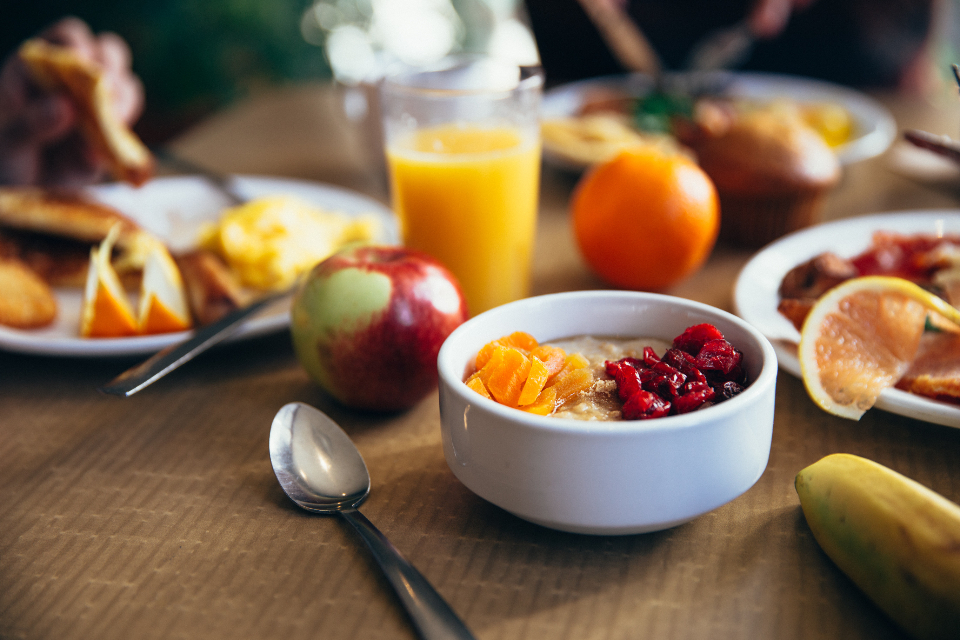
A healthy breakfast for energy combines protein, slow-release carbs, fiber and a little healthy fat — not a sweet pastry with coffee. Here's the simple principle for putting together a filling breakfast in five minutes.
A healthy breakfast for energy combines protein, slow-release carbs, fiber and healthy fats. A plate like this raises your blood sugar gently, so your energy lasts until lunch instead of running out an hour after a pastry and coffee.
Your energy through the day depends largely on how stable your blood sugar is. Fast carbs — pastries, sugary cereal, white bread with jam — raise it sharply and then drop it just as sharply. Hence the sleepiness, poor focus and urge to snack just a couple of hours later. For more on how sweets and energy dips are linked, see "Sugar and energy".
How do you build a healthy breakfast with the plate method?
The easiest way is the "healthy plate" model: half vegetables and fruit, a quarter whole grains, a quarter protein, plus healthy fats and water. This model comes from the Harvard T.H. Chan School of Public Health, and its proportions are easy to adapt for breakfast.
- Protein: eggs, cottage cheese, Greek yogurt, cheese, fish.
- Slow-release carbs: oatmeal, whole-grain bread, buckwheat.
- Fiber and vitamins: berries, fruit, vegetables, greens.
- Healthy fats: nuts, seeds, avocado, olive oil.
You don't have to weigh your food. Just check that your plate has at least one item from each group. We explain how the same principle works for lunch and dinner in "The plate method".
What's the best quick breakfast for energy all day?
A quick breakfast isn't a sandwich on the run but a simple combination of three or four foods. Here are options that come together in five minutes:
- Oatmeal made with milk, topped with berries and a handful of nuts (you can soak it overnight).
- Greek yogurt with fruit and chia seeds.
- Cottage cheese with apple and cinnamon.
- Whole-grain toast with avocado and an egg.
- Leftover buckwheat from dinner with an egg and vegetables.
Best breakfast for energy and protein: what can you make with eggs?
Eggs are one of the most convenient sources of protein in the morning: they cook in a few minutes and go well with vegetables. The key is to add slow-release carbs and fiber.
- An omelet with tomatoes, spinach or peppers and a slice of whole-grain bread.
- Boiled eggs with a vegetable salad and a handful of seeds.
- Fried eggs with herbs on whole-grain toast.
Boiled eggs are easy to make ahead for several days — then breakfast takes literally two minutes.
How do you make a healthy breakfast without sugar?
A no-sugar breakfast isn't bland food — it just means no added sugar, with the sweetness coming from fruit and berries. That way your blood sugar changes more gently and you stay full longer.
- Choose unsweetened cereal and plain yogurt — add sweetness with berries.
- For flavor, use cinnamon, vanilla, grated apple or banana.
- Swap sugary juices for water or unsweetened tea: juice has little fiber.
- Check the label: sugar can hide in granola and ready-made oatmeal.
Tips on cutting back on sugar and sugary drinks are also part of the NHS healthy eating advice.
Which breakfast mistakes should you avoid?
The most common mistake is a breakfast with almost no protein or fiber. It's digested quickly and hunger comes back by mid-morning.
- Just coffee on an empty stomach instead of food.
- Sugary cereal, a croissant or cookies as the basis of breakfast.
- A big glass of juice instead of a whole piece of fruit.
- Breakfast on the go, when you barely notice the food.
It's better to take five minutes and sit down at the table: that way it's easier to feel full and not overeat later.
What if you're not hungry in the morning?
Don't force yourself. Start with a small snack — yogurt, a piece of fruit, a handful of nuts — and have a proper meal an hour or two later. Morning appetite often comes once your sleep routine and morning light are in order.
If you're eating a good breakfast and the sluggishness doesn't go away for weeks, read "Why am I always tired?" and talk to your doctor about how you feel.
If you're short on energy in the morning, you can add the Cellergize Morning drink with vitamins, minerals and amino acids (lemon-ginger flavor) to your breakfast — it's a dietary supplement, so if you're pregnant, breastfeeding, taking medication or have a health condition, check with your doctor first. Another option is caffeine-free Energy Enhancer patches. And for people changing their eating habits, according to the company, the SP6 Complete patch helps with a more mindful approach to appetite.