Strength training after 50: why walking alone isn't enough
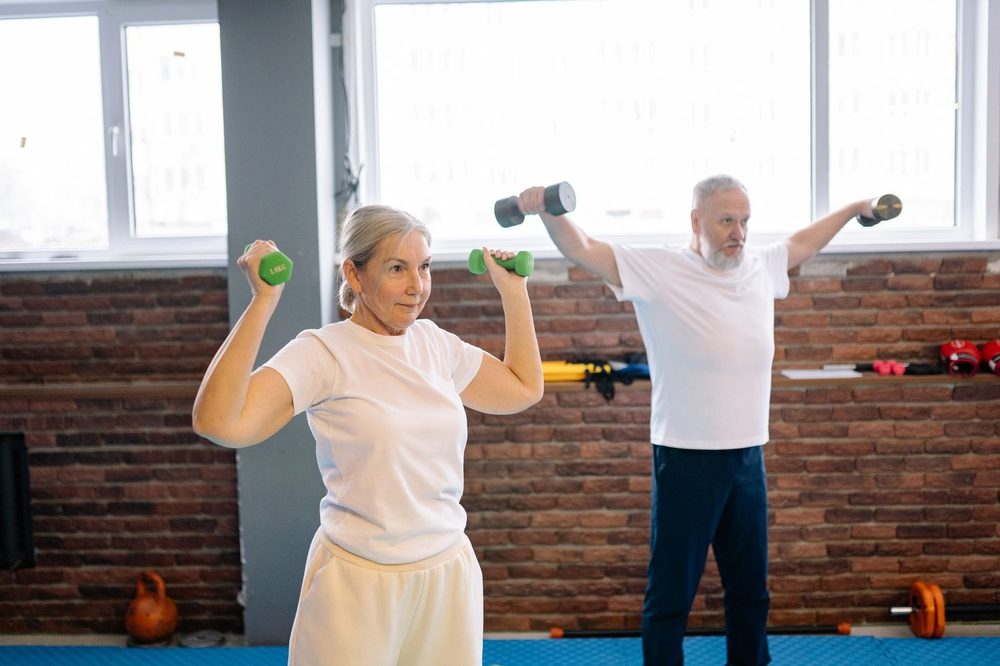
Strength training after 50 isn't about muscle definition — it's about still being able to get up from a chair on your own, carry your shopping and walk down stairs with confidence twenty years from now. Here's what sarcopenia is, why walking doesn't stop it, and how to start strength training at home, even if you've never done it before.
10,000 steps a day, Nordic walking on weekends, the exercise bike during your favorite show — and a calm certainty that you've done everything your body needs. The uncomfortable truth: after 50, cardio alone isn't enough. Walking is excellent training for your heart and endurance, but it does almost nothing to stop what's quietly happening to your muscles. Strength training after 50 isn't about definition or the gym. It's about still getting up from a chair on your own and carrying heavy grocery bags home twenty years from now.
What is sarcopenia in simple terms?
It's the age-related loss of muscle mass and strength. It starts long before retirement and progresses quietly — until one day you find that getting up from a low sofa takes help from your hands.
According to Harvard Medical School, after 30 a person loses up to 3–5% of their muscle mass every decade, and most men lose about 30% of their muscle over a lifetime. Worse, the fast-twitch fibers responsible for power go first — which is why with age we become not just weaker, but slower.
Slower isn't about sports. It's about whether you manage to catch your balance when you miss a step.
Strength training vs. walking: which matters more after 50?
Not "or" but "and." Walking is for your heart and endurance; strength training is for muscles, strength and balance. One can't replace the other.
WHO guidelines for adults, including those over 65, have two parts: 150–300 minutes of moderate aerobic activity a week, plus muscle-strengthening activities for all major muscle groups at least two days a week. For older adults, the WHO also advises varied activity that emphasizes balance and strength at least three days a week to prevent falls.
Most of us dutifully do the first half and forget the second. Walking remains the best foundation — we explain why in our article on the benefits of walking — but it's only half the recipe.
How to start the second half at home, without a gym or a trainer, is laid out in the PDF that comes with this article: a 4-week strength program with a before-and-after test and a workout tracker.