Flexibility After 40: Why It Declines and How to Get It Back
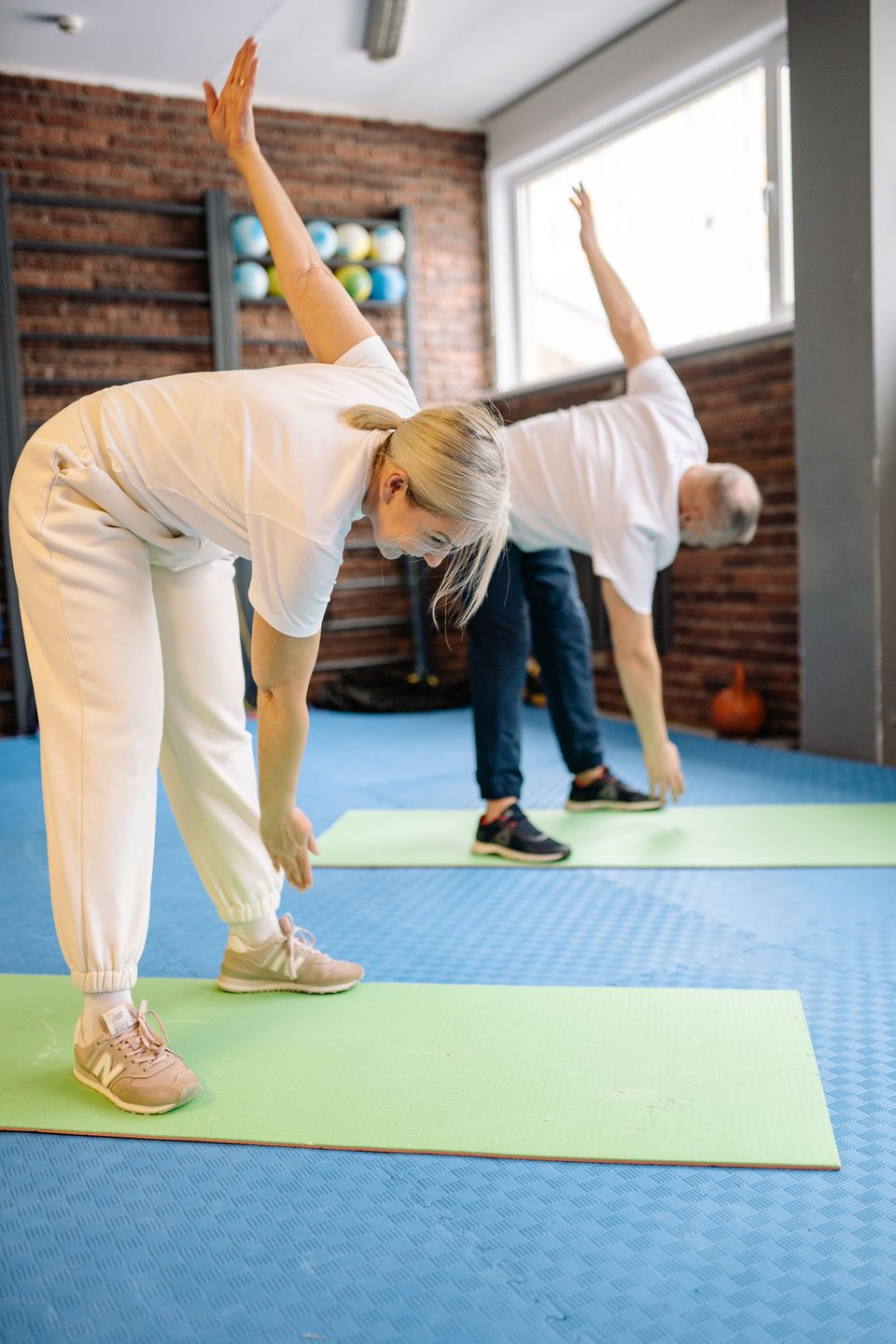
Morning stiffness and "creaky" joints aren't a life sentence of aging — they're largely the result of moving through a smaller range of motion over the years. Here's how to regain mobility after 40.
After 40, many people notice that bending down to pick something up or reaching a hand behind the back has become harder than before. This is less about "age" and more about years of a sedentary lifestyle and a natural decline in tissue elasticity. The good news is that flexibility is trainable at any age, and you can regain much of your mobility within a few weeks of regular practice.
Why Flexibility Declines Specifically After 40
With age, connective tissue — tendons, ligaments, joint capsules — loses elastin, and muscle fibers become less elastic. On top of that, years of desk work train the body into the same posture, so the hip flexors, chest muscles, and hamstrings gradually shorten. The good news: most of this stiffness is reversible with regular practice.
Which Exercises Restore Mobility
- Hamstring and calf stretches — a basic exercise against stiffness when walking or bending.
- Chest and shoulder stretches — especially important for people who sit at a computer a lot.
- Hip rotations and leg swings — maintain range of motion in the legs.
- Gentle seated or lying spinal twists — release tension in the lower back.
A detailed breakdown of stretching technique before and after exercise is in "Stretching Before and After a Workout", and a short morning routine is in "Morning Stretches".
How to Fit Stretching Into a Normal Day
You don't need to set aside separate time: a few minutes of stretching can be done while watching the news in the evening or right after a morning shower, while your muscles are still a bit warm. Consistency matters more than duration — 10 minutes every day beats an hour once a week.
Flexibility pairs well with strength work: joint and muscle health after 40 is best approached together, as described in "Strength Training After 40". Many people who train regularly also use LifeWave's X49 patch — designed for endurance and recovery after exertion, and paired with the X39+X49 set for more complete support of an active lifestyle.