Pilates for beginners: how to start at home and how it differs from yoga
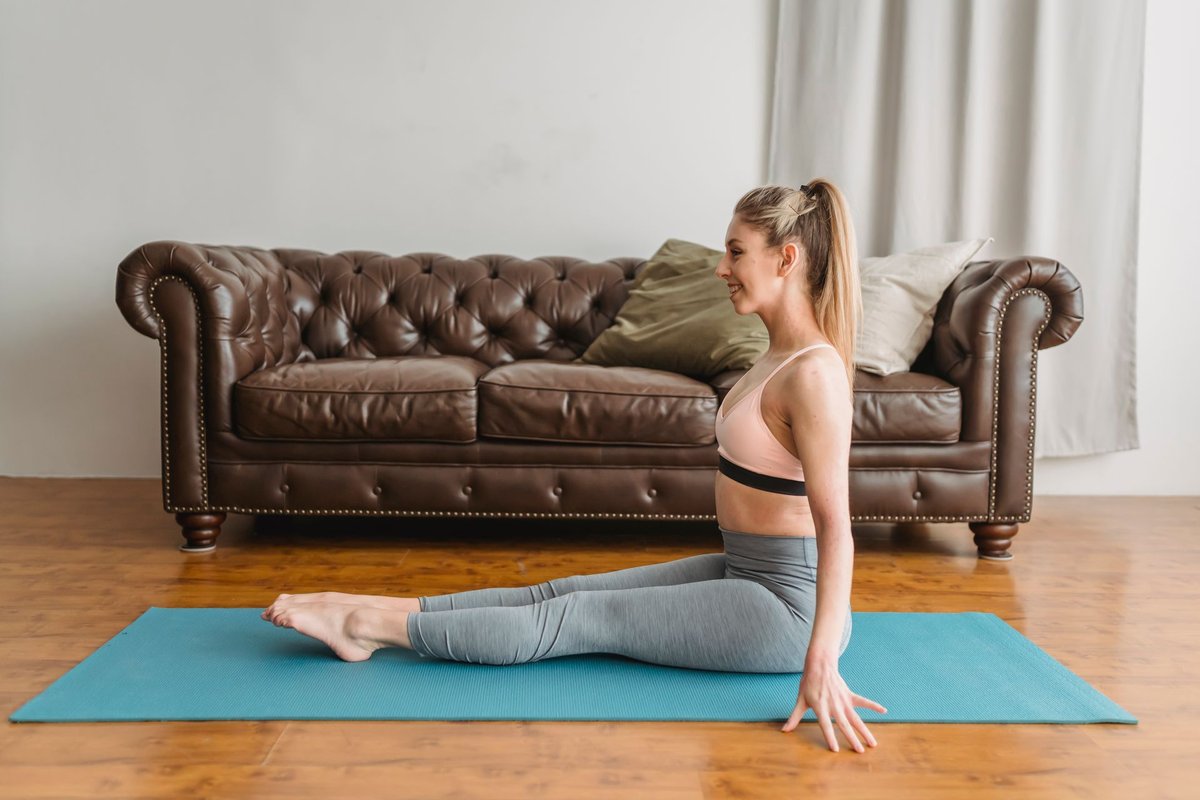
Pilates for beginners means calm, precise exercises for your core, posture and flexibility. Here is how to start at home, whether Pilates suits you after 50 and how it differs from yoga.
Pilates for beginners appeals because it requires neither special flexibility nor expensive equipment — a mat and attention to your body are enough. The method was created by Joseph Pilates in the early 20th century, combining, according to Healthline, ideas from yoga, ballet, meditation and martial arts.
Pilates for beginners at home: where to start?
Start with 1–2 sessions a week of 20–30 minutes and a thick mat: as Healthline advises, a regular yoga mat may be too thin for Pilates. In the first weeks, focus on breathing and technique rather than the number of repetitions.
- The six principles of Pilates: centering, breathing, concentration, precision, control and flow.
- Basic exercises to start: the bridge lying on your back, an easier version of the hundred with knees bent, cat on all fours, and alternating arm and leg reaches.
- If you can, take a few introductory sessions with an instructor to get your technique right.
Pilates for beginners over 50: is it a good fit?
Yes, for many people it’s a great choice: the exercise is gentle, without impact or jumping. According to the Hospital for Special Surgery, Pilates is easier on the joints, strengthens the core muscles, improves posture, flexibility and body awareness, and the exercises can be adapted to any level. Harvard Health also calls Pilates a good workout option as we age.
Pilates vs yoga: what’s the difference?
Both practices combine breathing and movement, but the emphasis differs. Pilates is more about controlled movement, stabilizing muscles and body alignment, while yoga is about holding poses, stretching and a meditative element; more on that in our article Yoga for beginners.
Pilates complements walking and strength training well, and you can read about caring for your back in our article Preventing back pain. To make it easier to stay consistent, many people choose Y-Age Carnosine — according to the company, it supports motivation to move — and for endurance during more active workouts, the X49 patch.