Hara hachi bu: the Okinawan rule of eating until you're 80% full
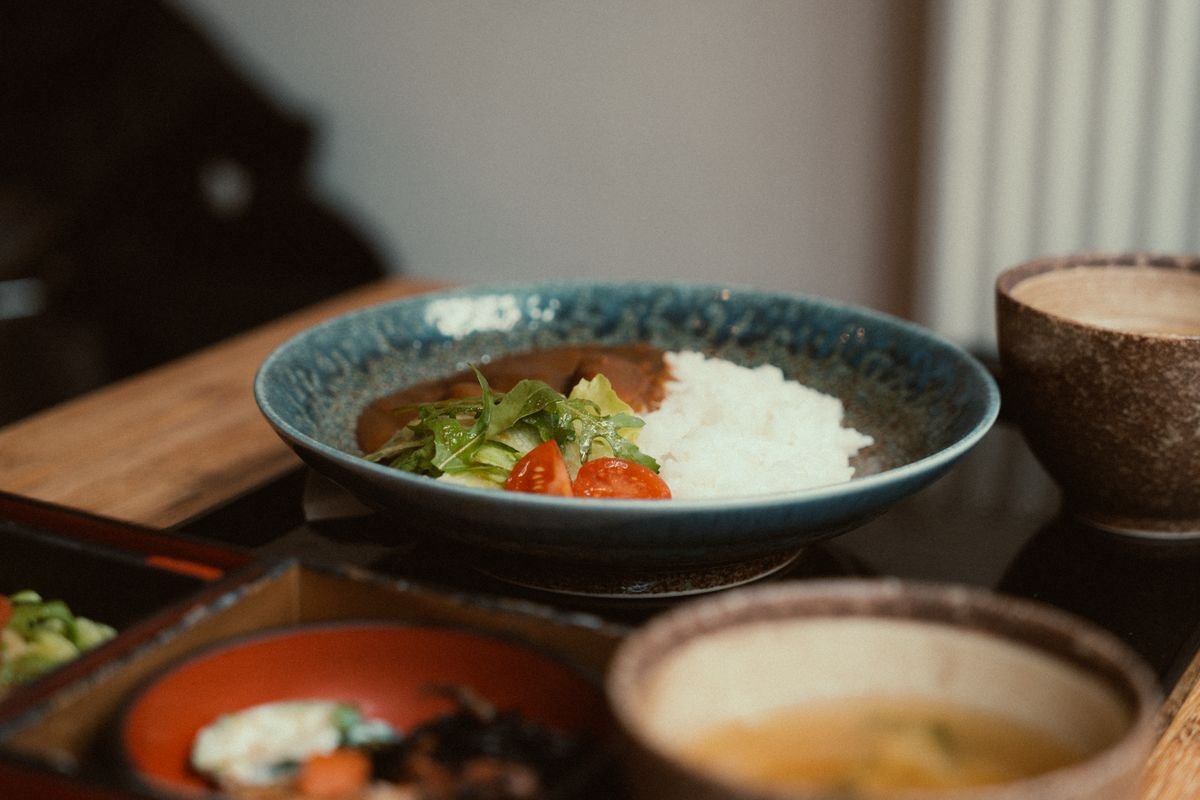
Hara hachi bu is a Japanese phrase people in Okinawa say before meals: "eat until your stomach is eight parts out of ten full." Here is what it means, how the principle works and how to practice it without counting calories.
Hara hachi bu is the rule of leaving the table when you're about 80% full rather than stuffed. It often comes up in conversations about Okinawa's long-lived people (Blue Zones). It's not a diet or a fast, but a way to listen to your body's signals and eat without rushing.
Hara hachi bu meaning
It's a Japanese phrase that literally means "belly eight parts (out of ten)." In Okinawa people say it before meals as a reminder: finish eating a little before you're completely full.
In English you'll see it written in a couple of ways — "hara hachi bu" and the longer "hara hachi bun me." There's no difference in meaning: it's the same phrase, just shortened or spelled out.
In Okinawa the rule lives on not as a strict ban but as a family habit: people repeat it before meals as naturally as wishing each other a good meal. So it's worth applying gently too — as a reminder, not as a reason to scold yourself over an extra spoonful.
How does the hara hachi bu technique work?
The principle is simple: stop when your hunger is gone but before you feel heavy. The rule doesn't ban foods or require a scale — only attention to that moment (Cleveland Clinic).
The point is that the feeling of fullness lags behind. Signals from the stomach and satiety hormones take a while to reach the brain — Harvard experts estimate this can take about 20 minutes (Harvard Health). If you eat quickly, it's easy to overeat before your body has a chance to say "enough."
- 80% is lightness and a clear head after eating.
- 100% is the feeling that nothing more will fit.
- Over 100% is heaviness, drowsiness and the urge to lie down.
Is hara hachi bu a diet?
No. A diet usually sets a list of foods or calories, while hara hachi bu is only the habit of stopping in time. That's why the rule is easy to combine with any cuisine and any eating pattern.
The principle works well with filling foods: vegetables, protein and whole grains. For foods that keep you satisfied longer, read "Fiber and digestion" and "Snacks for energy".
- Start your meal with vegetables or soup — they take up room in the stomach.
- Add protein to every meal — it keeps you full longer.
- Drink water throughout the day: thirst is easy to mistake for hunger.
How to practice hara hachi bu every day
Start with your pace and portion size — these two steps make the biggest difference. The rest are habits that help you notice fullness.
- Serve your portion onto the plate and take the pot off the table.
- Choose a smaller plate — a simple way not to overdo it.
- Eat more slowly: put your fork down between bites and chew thoroughly.
- Don't get distracted by your phone or TV — that makes fullness easier to notice.
- Before a second helping, pause for 10–15 minutes and ask yourself whether you're really hungry.
After eating, it's better to take a walk than to lie down: a few ideas are in "Walking after eating". And for a broader look at the Okinawan way of life, see "Habits of long-lived people".
Who should be more careful with the rule?
Hara hachi bu suits most adults, but it's no reason to undereat. For people with heavy physical loads, during recovery, for teenagers and for those with special nutritional needs, getting enough protein and energy matters more.
The 80% rule is about mindfulness, and many people find simple supports helpful. According to LifeWave, the SP6 patch supports a mindful approach to appetite (more in our article about SP6 Complete), and some people make the Cellergize Morning drink with vitamins and minerals part of a calm morning ritual instead of breakfast on the run. If you're pregnant, breastfeeding or taking medication, check with your doctor before taking supplements.