Healthy Fats in Your Diet: Avocado, Nuts, Fish
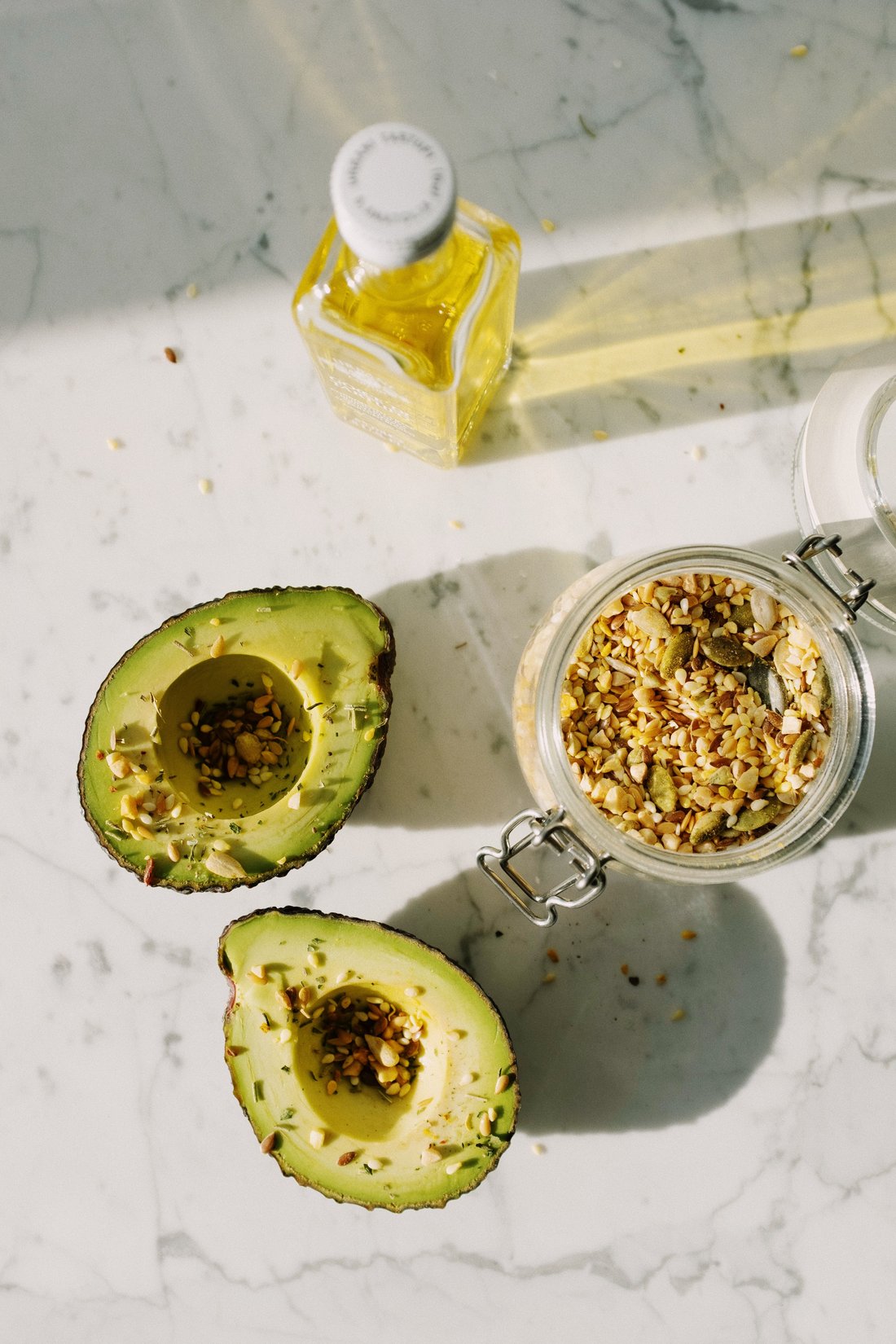
Healthy fats in your diet are essential for hormones, vitamin absorption and cell function — no diet is balanced without them. Here is which fats are healthy, how much you need, which foods to get them from and how to handle fats when you're losing weight.
Healthy fats in your diet are, first and foremost, the unsaturated fats in olive oil, avocado, nuts, seeds and oily fish. They are needed for hormones, vitamin absorption and cell function, so cutting them along with the “bad” fats is a mistake. The benchmark is 20–35% of your daily calories from fat, mostly unsaturated.
For a long time, fat was seen as the enemy of a slim figure. In reality, the problem isn't fat as such but too much saturated and trans fat and too little unsaturated fat.
The good news: getting enough healthy fats doesn't require complicated plans. Eat fish a couple of times a week, add a handful of nuts or seeds every day and cook with plant oil instead of butter.
Benefits of healthy fats in your diet: why does your body need them?
Fats aren't just calories; they are building and regulatory material. Without them, your body can't function properly.
- they are involved in hormone production;
- they help absorb the fat-soluble vitamins A, D, E and K;
- they are part of cell membranes;
- they keep you full for longer.
That's why a completely fat-free diet rarely does you any good, even if your goal is to lose weight.
Healthy fats to include in your diet: a list of foods
Monounsaturated and polyunsaturated fats, especially omega-3s, are considered healthy.
- Monounsaturated — olive and canola oil, avocado, almonds, hazelnuts.
- Omega-3 — oily fish (salmon, mackerel, sardines), flaxseed, chia seeds, walnuts.
- Omega-6 — plant oils, sunflower seeds: they matter too, but the modern diet usually has plenty of them already.
Many of these foods are the foundation of Mediterranean-style eating, covered in detail in “Mediterranean diet”.
How much fat do you need a day?
The general benchmark is 20–35% of your daily calories from fat, keeping saturated fat to roughly 10%.
In practice, that means not being afraid of avocado, nuts and fish, but not overdoing greasy fast food, processed meats and creamy sauces. You don't have to count grams — it's enough for healthy fats to show up on your menu every day.
Why does your body need omega-3s?
Omega-3 fatty acids are linked to supporting the cardiovascular system and brain function. Their main source is oily fish.
If fish rarely makes it onto your plate, add plant sources: flaxseed, walnuts, chia seeds. For a detailed breakdown, see “Omega-3: where to get it if you don't like fish”, and for foods that support a clear head, see “Nutrition for the brain”.
How to get more healthy fats in your diet at breakfast
The easiest way to add healthy fats to breakfast is in small amounts, alongside the dishes you already eat.
- a handful of nuts or a spoonful of seeds in your oatmeal;
- avocado toast with an egg;
- yogurt with chia or flax seeds;
- a vegetable omelet cooked in olive oil.
A breakfast like this keeps you full longer. More ideas in “Healthy breakfast for energy”.
Are fats good for weight loss?
Yes, in sensible amounts. Healthy fats keep you full and help you avoid overeating later, while cutting them out completely deprives your body of what it needs.
When you're losing weight, your overall calorie balance matters more: keep the fish, nuts and olive oil, but cut back on fried food, baked goods and processed meat.
Still, match your portions of healthy fats to your goal: nuts and oil can quietly add up in calories. A handy trick is to measure oil with a spoon rather than pouring by eye, and keep nuts in a small single-serving container.
How are fats linked to antioxidant protection?
Unsaturated fats are prone to oxidation, so good antioxidant support matters for your body. Vegetables, fruit, berries and leafy greens provide it.
Some people add the Y-Age Glutathione patch to their routine: according to the company, it supports overall wellbeing, helps you relax and improves the appearance of your skin.
Cutting out fats completely is a bad idea whatever your goal. It matters far more to shift the balance toward unsaturated sources and not fear them because of their calories.