Indoor exercises for rainy days: how to stay active when it's pouring outside
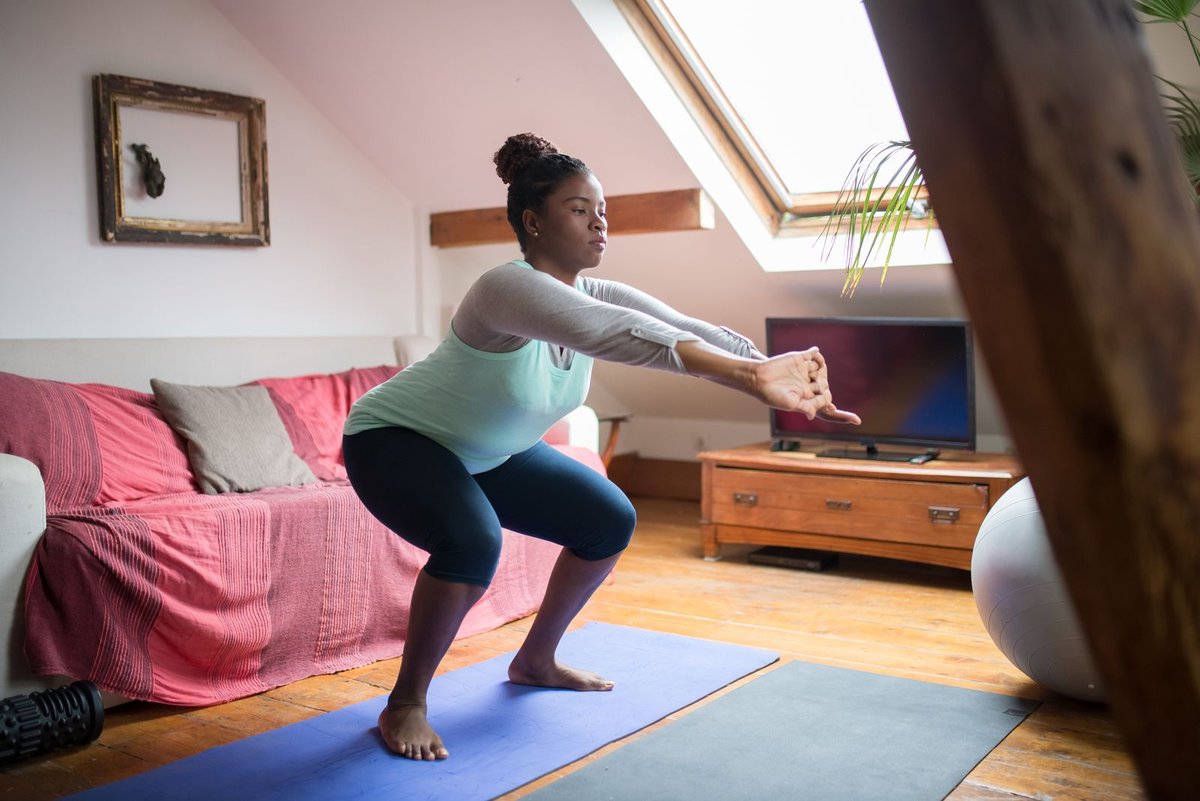
Indoor exercises for rainy days come to the rescue when it's pouring, slushy, smoggy or you just don't feel like going out. Here is a simple beginner plan: how to start, which bodyweight exercises to choose and how often to work out.
Indoor exercises for rainy days are the easiest way to keep moving when you can't get outside: 15–20 minutes of bodyweight exercises already give your body a workout. Rain, slush, frost or smog — the reason doesn't matter much. The key is to decide in advance what will replace your usual walk so movement doesn't drop out of your day.
How to exercise on a rainy day: getting started
Start small: 2–3 short sessions a week at the same time. Consistency matters more than length or difficulty.
- Choose a spot where you can take a step in any direction and lie down on a mat.
- Set a time — for example, right after work or before dinner.
- Keep the first week easy to see how your body responds.
The target stays the same as outdoors: the WHO recommends 150–300 minutes of moderate activity a week for adults and strength exercises at least 2 days a week (WHO), and short bouts of movement count too (CDC).
A simple beginner routine for indoor exercise
The routine takes 15–20 minutes, needs no equipment and works in any weather. Do 2–3 rounds, resting 30–60 seconds between exercises (British Heart Foundation, BHF).
- High-knee marching in place — 1 minute to warm up.
- Sit-to-stand squats onto a chair — 10–12 reps.
- Wall or table push-ups — 8–12 reps.
- Calf raises holding a support — 15 reps.
- Glute bridges lying on a mat — 12 reps.
Exercises to do inside on a rainy day: which moves to choose?
Choose movements that work large muscles: legs, glutes, back, chest and core. They're easy to make harder without equipment.
- Legs: squats, reverse lunges, calf raises.
- Upper body: wall push-ups, then table push-ups, then knee push-ups on the floor.
- Core: forearm plank, dead bug, side plank from the knees.
- Cardio: marching in place, stepping onto the bottom stair, dancing to music.
For more strength ideas, see "Strength training after 40".
Focus on form, not rep count: slow, controlled movement gives you more than fast, sloppy movement. If an exercise causes joint pain, switch to an easier version.
How often should you work out indoors?
For beginners, 3 workouts a week with a rest day in between work well. On other days you can add light movement: walking around the house during calls, taking the stairs, stretching.
Stairs are a great substitute for a walk: in one study, short stair climbs (about 60 steps) three times a day for 6 weeks improved fitness in inactive people (ScienceDaily). Short activity breaks are covered in detail in "Micro-workouts during the day".
How to plan your rainy-day workout week
Write down your weekly plan the way you would work meetings. A sample to start with:
- Monday — bodyweight routine, 2 rounds.
- Wednesday — 20 minutes of light cardio: marching, stairs, dancing.
- Friday — bodyweight routine, 3 rounds.
- Weekend — a walk if the weather allows, or stretching at home.
Rainy day exercise ideas: how to stay active when you can't go outside
Besides workouts, look for ways to move in indoor spaces: a walk in a mall, a covered market or a big train station, the stairs instead of the elevator, active cleaning. In cities with poor air it's useful to know when to exercise at home — see "Running in air pollution" — and for the benefits of plain walking, see "Benefits of walking".
Gray weather and less light often drain energy, so it's important to keep your usual rhythm of sleep, food and movement. During such periods some people wear the X39 patch, which, according to LifeWave, supports energy and recovery, and during the day choose Energy Enhancer — a patch for steady energy without caffeine.
Questions and answers
How often should you do indoor workouts?
How do you plan a home workout for a rainy day?
Do you need equipment for indoor exercises?
Can taking the stairs replace a walk on a rainy day?
How long should a beginner's indoor workout be?
Read also
Sources
- WHO / NCBI Bookshelf — WHO Guidelines on Physical Activity and Sedentary Behaviour: Executive Summary
- ScienceDaily — Short bouts of stairclimbing throughout the day can boost health
- British Heart Foundation — Home workout: 9 easy ways to exercise at home
- CDC — What Counts as Physical Activity for Adults