Balance and fall prevention: simple exercises after 60
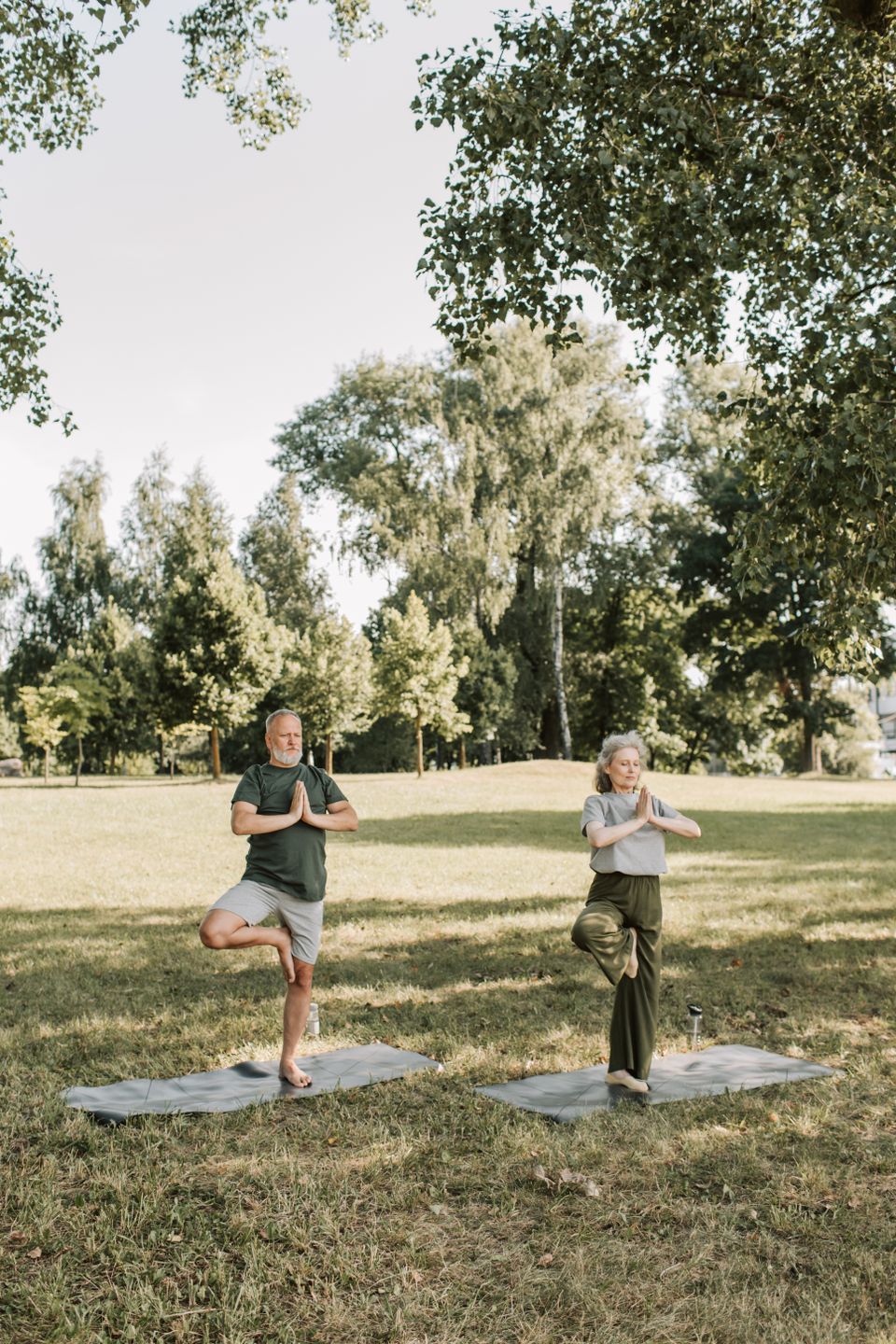
Balance and fall prevention go hand in hand after 60: steadiness can be trained just like muscles. Here is a safe daily routine and the changes at home that make it more reliable.
Balance and fall prevention exercises are one of the simplest ways for older adults to lower the risk of falls after 60. With age, the sense of balance gradually declines: muscles, joints and the vestibular system all change. The good news is that steadiness, like muscle strength, can be trained at any age.
Below is a safe home routine, exercises for the vestibular system and changes around the house that make fall prevention more reliable. The recommendations are based on material from the NHS and the US National Institute on Aging.
Why does balance get worse after 60?
Balance relies on several systems at once, and with age each of them works a little less well. Separately the changes are barely noticeable, but together they raise the risk of tripping.
- Leg and core muscles lose strength — more in “How to preserve muscle mass after 60”.
- Joints become less mobile, and steps become shorter and more cautious.
- The vestibular system and vision are slower to tell the body where it is.
- A sedentary lifestyle speeds up all of these processes.
Balance and fall prevention exercises for seniors
Simple exercises next to a support that you can do at home every day work best. Start with 2–3 exercises and add new ones as you gain confidence.
- Standing by a chair and holding its back, lift one knee at a time, holding for 5–10 seconds.
- Heel-to-toe walking along a straight line, with one hand on the wall.
- Standing on one leg next to a support — start with a few seconds and gradually increase the time.
- Rising onto your toes and lowering onto your heels while holding the back of a chair.
- Standing up from a chair without using your hands and slowly sitting back down.
Which vestibular exercises suit older adults?
The vestibular system is trained with smooth movements of the head and eyes. Do them standing next to a support or sitting, slowly and without jerking.
- Slow head turns to the right and left, then up and down.
- Shifting your gaze from one object to another without turning your head.
- Smooth torso twists while standing, hands on your hips.
- Walking around the room with slow head turns — next to a wall or with someone close by.
Gentle, flowing practices are a good addition to this routine. More in “Tai chi for beginners: benefits for balance and first steps”.
Balance training and fall prevention: how often and how long?
For a noticeable effect, 5–10 minutes a few times a week is enough — daily is even better. Consistency matters more than the length of a single session.
It helps to tie the exercises to something you already do: for example, stand on one leg at the kitchen counter while the kettle boils. Gradually make it harder: hold on with two hands first, then one, then just your fingertips.
How to improve balance and prevent falls at home
Exercises work better when your home has no unnecessary hazards. Simple changes around the house noticeably reduce the risk of falling.
- Stable shoes with no heel and non-slip soles.
- Good lighting in hallways and a night light on the way to the bathroom.
- No rugs or cords that are easy to trip over.
- Grab bars in the bathroom and a non-slip mat in the shower.
Regular walking also helps maintain leg strength and overall stability, and the gentle exercises from “Joint mobility exercises after 55” keep you mobile. Do not forget about bone health after 50 — the other side of injury prevention.
How do you keep your energy up for daily exercise?
Balance only improves with consistency, so it matters that you have the energy for walks and short home routines. Good sleep, daily movement and a manageable load without overdoing it all help.
For energy on daily walks and exercises, many people use the X39 patch. According to the company, it helps you feel more energy during the day and recover better after exercise; the patch does not enter the skin and contains no medicinal substances.