Tai chi for beginners: principles, benefits for balance and first steps
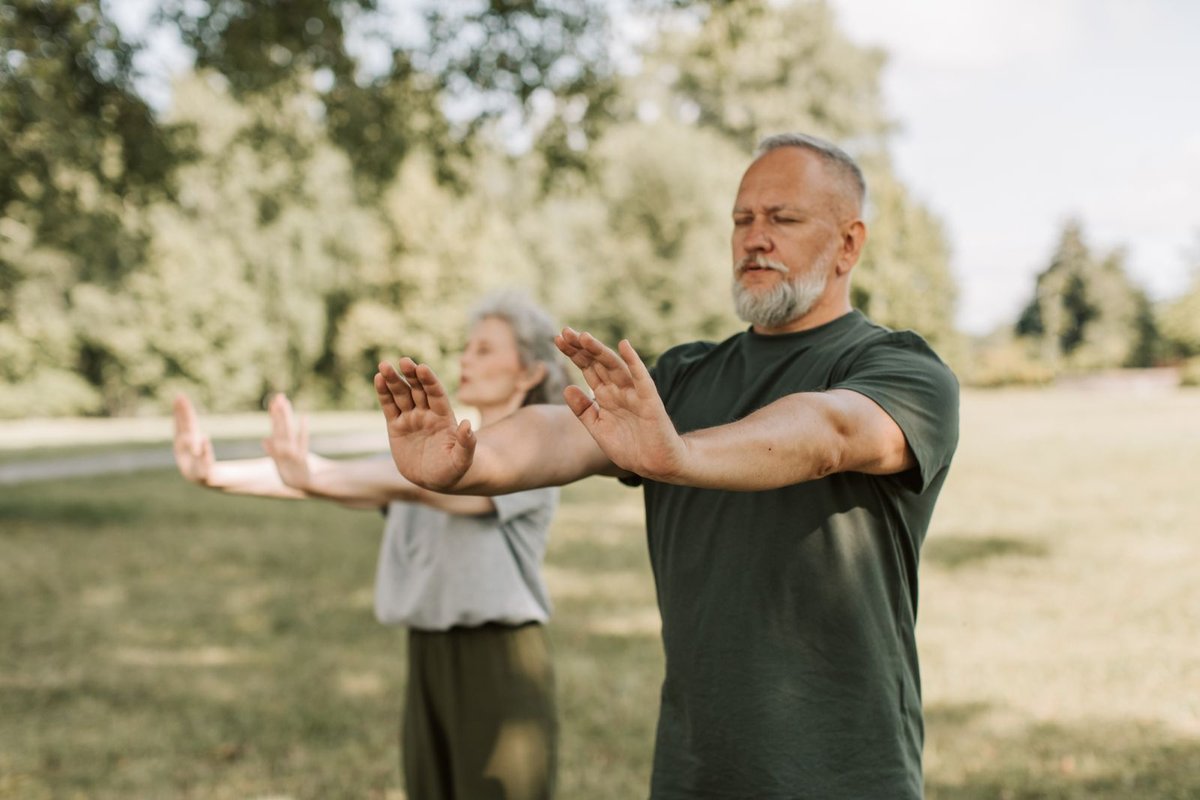
Tai chi for beginners means slow, flowing movements, calm breathing and attention to your body. Here is how the practice benefits balance and calm and how to start with no experience.
Tai chi for beginners is often called “meditation in motion”: you move slowly from one posture to the next, breathe calmly and pay attention to your balance (Harvard Health). In Taiwan and China, tai chi in the park in the morning is a common sight, and a good example of how the practice suits people of any age.
What are the benefits of tai chi?
Research links regular tai chi practice to better balance and a lower risk of falls in older people (NCCIH, US National Institutes of Health). In addition, many people find that slow breathing and focusing on movement help ease tension after a busy day.
Tai chi for beginners: which exercises to start with?
It’s better to start not with a long form but with a few basic elements:
- Stance: feet shoulder-width apart, knees softly bent, spine long, shoulders down.
- Weight shift: slowly shift your weight from one leg to the other without lifting your feet.
- “Opening” and “closing”: hands at chest level smoothly move apart as you inhale and come together as you exhale.
- Tai chi step: place your foot heel first, then smoothly shift your weight onto it.
- Breathing: even, through the nose, without holding — the movement follows the breath.
Tai chi for beginners over 60 and seniors: where to start?
The easiest way is to start with a group or online classes for beginners, where an instructor shows a short form and explains the stance. At home, 10–15 minutes and a couple of steps of free space are enough. If you’re interested in balance, read Balance and fall prevention, and if you’d like to combine movement and breathing differently, see Yoga for beginners.
Tai chi teaches you to slow down, and many people want to keep that feeling throughout the day. Some choose Y-Age Aeon — according to LifeWave, a patch for relaxation and calm — and for those who value comfort in movement, there’s IceWave.