Breathing exercises for stress: three techniques that work in minutes
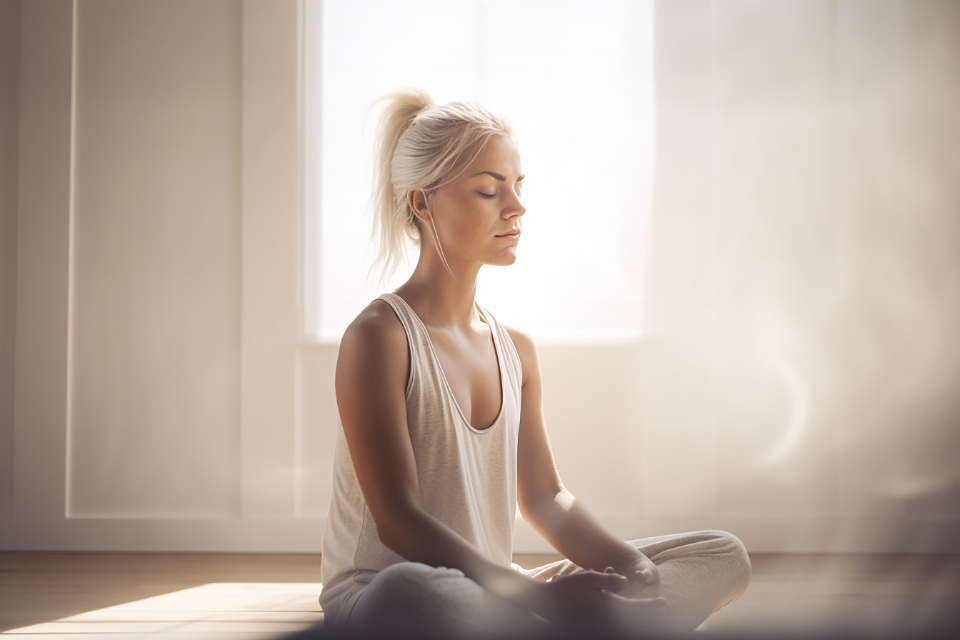
Breathing is the only body function that runs on its own yet can be controlled. Let us use that to calm down and sleep better.
When we are nervous, breathing becomes fast and shallow. It works the other way too: if you deliberately slow down and deepen your breathing, the nervous system gets the signal "there is no danger" — your heart rate drops and muscle tension eases. This is not magic but physiology, and anyone can learn it.
How can you calm down with your inhale and exhale?
Sit comfortably or lie down. Breathe in through your nose, gently counting to 4, and breathe out through your mouth, counting to 6. An exhale longer than the inhale is what calms you. Repeat for 3–5 minutes.
What is box breathing?
Inhale for 4 counts, hold for 4, exhale for 4, pause for 4. People love this technique for its simplicity: you can do it anywhere, even in a queue or before an important meeting.
How do you breathe with your belly to relax before sleep?
Put one hand on your chest and the other on your belly. Breathe so that the hand on your belly rises while your chest stays almost still. This kind of breathing is especially helpful before sleep.
What else helps reduce stress?
- Regular physical activity — even 20 minutes of walking.
- Time with people close to you and real conversations.
- Breaks from news and social media.
- Enough sleep — when sleep-deprived we react to stress more sharply.
If anxiety interferes with your life and work for weeks, that is a reason to see a specialist. And if stress shows up as constant sluggishness, have a look at "Constant fatigue".
For people living at a fast pace, LifeWave has the Y-Age Aeon patch — it helps you relax and handle stress more calmly; it also comes in the Y-Age kit of three patches. In the evening, breathing practice goes well with the Silent Nights patch and the melatonin-free Cellergize Evening drink.