Blue light and sleep: do screens really keep you awake
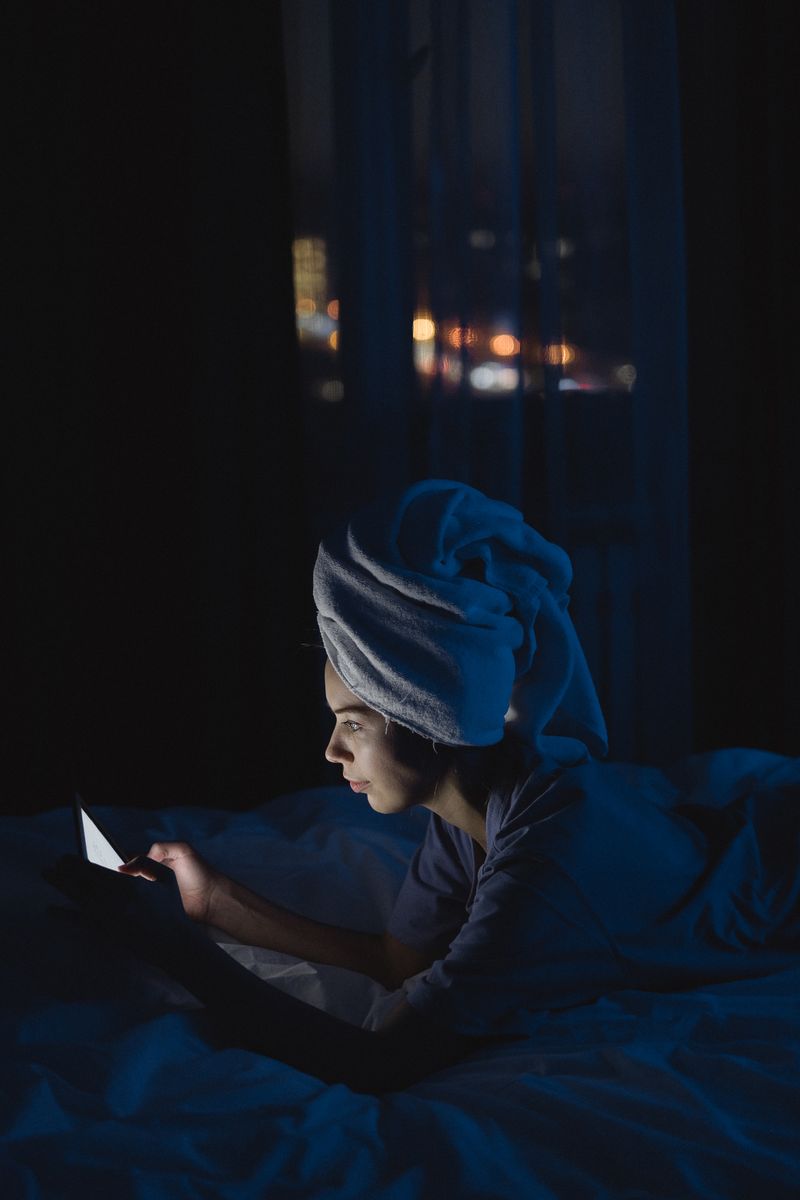
Blue light and sleep really are connected, but late-night scrolling disrupts rest for more reasons than light alone. Here is what research supports and what is an oversimplification.
Blue light and sleep really are connected: in the evening, screen light can shift the moment your body starts getting ready for sleep. But your phone keeps you awake with more than light — what you watch and how much time it takes matter just as much. The good news: you don't need to give up technology to sleep better. Changing a few evening habits is enough — more on them below.
How does blue light affect sleep?
Blue light suppresses melatonin — the hormone that signals it is time to sleep — more strongly than warm light.
Our internal clock takes its cues from light. During the day, bright light with a blue component helps you stay alert, but in the evening the same signal confuses the body: it "thinks" the day is still going. As a result, sleepiness may arrive later than usual. More on the mechanism from the Sleep Foundation.
Why is blue light a problem mainly in the evening?
Blue light isn't "bad" in itself — it is all about the time of day.
In the morning, natural daylight actually helps set your internal clock — see "Morning light". Problems start when, late in the evening, we stare at a bright screen up close for a long time:
- your internal clock gets the signal "it's still daytime";
- falling asleep may shift later;
- if this happens every evening, your schedule gradually drifts.
Is it only about the light?
No: what's on the screen often stimulates the nervous system more than the light itself.
Work email, alarming news, arguments in the comments, emotional videos — all of it keeps the brain in active mode regardless of brightness. An endless feed also eats time: "five more minutes" easily becomes an hour, and sleep simply gets shorter. That's why night mode is useful but doesn't solve everything.
What really helps you fall asleep at night?
A combination works best: less bright light and less stimulating content in the last hour before bed. That's the core of good sleep hygiene around screens.
- Lower screen brightness and turn on night mode with warm tones.
- Put your phone away 30–60 minutes before bed and charge it away from your bedside.
- Dim the overhead lights at home and keep warm table lamps on.
- Replace scrolling with something calm: a paper book, a conversation, gentle stretching.
- Go to bed and get up at roughly the same time — your internal clock needs rhythm.
- Keep the bedroom dark and cool: blackout curtains help if there are bright streetlights outside.
Ideas for a calm evening are collected in "Evening rituals for solid sleep", and if your bedtime has long since drifted late, see "How to fix your sleep schedule".
How can you tell whether screens affect your sleep quality?
The simplest way is to test it on yourself: for a week or two, put your phone away early and watch how you fall asleep.
People differ in how sensitive they are to evening light and content. Some fall asleep easily after a movie; for others a few minutes of news is enough to toss and turn for a long time. Watch for these signs:
- you go to bed with your phone and notice far more time has passed than you planned;
- after scrolling, your thoughts keep circling around what you read;
- mornings are hard, even though you technically spent enough time in bed;
- on weekends your bedtime keeps getting later.
If this sounds like you, start small. One clear rule — for example, "no phone in the bedroom" — is easier to stick to than a total screen ban.
Do blue-light glasses help?
They can be useful, but they don't replace the main thing — less screen time in the evening.
If you can't avoid your phone at night, a filter or night mode will ease the load a little. But if the feed keeps you up until the small hours, no filter will give back the lost sleep. For eyes tired from a monitor all day, the simple rules in "Eye strain from screens" will also help.
A good replacement for evening scrolling is a calm bedtime ritual. Some people include the Silent Nights patch: according to the company, it helps you relax in the evening, and relaxation supports sleep quality.