Breathing exercises for stress: three techniques that work in minutes
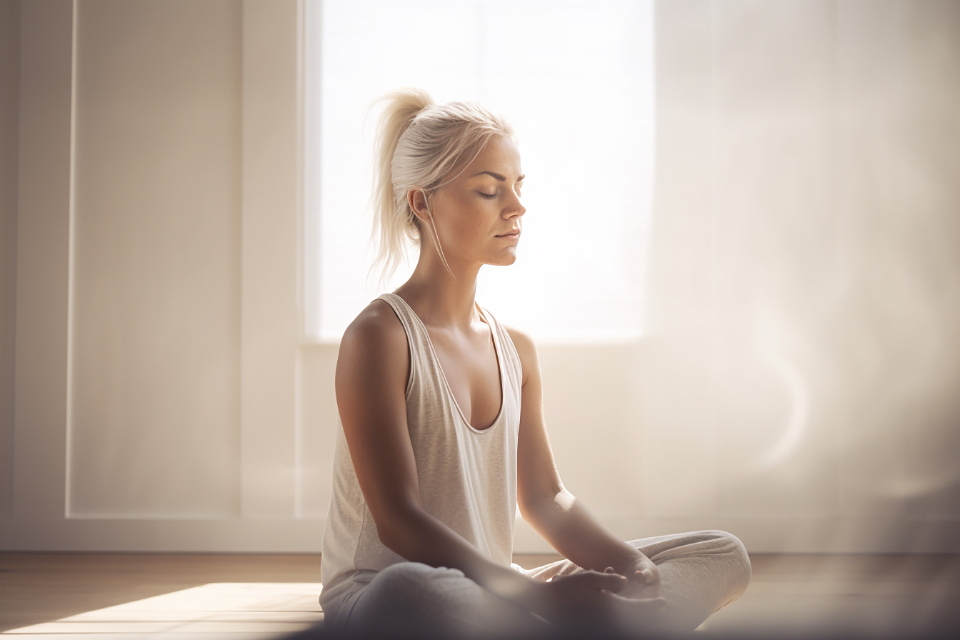
Breathing exercises for stress work because breathing is the only body function that runs on its own yet can also be controlled. Let's use that to calm down and sleep better.
Breathing exercises for stress are the fastest way to calm down with no preparation: when you deliberately slow your breathing and lengthen your exhale, your nervous system gets the signal that there's no danger. 2–5 minutes is enough to lower your heart rate and muscle tension (NHS).
When we're nervous, our breathing becomes fast and shallow. It works the other way too: slow, deep breathing helps the body leave anxiety mode. It's not magic but physiology, and anyone can learn it.
Which breathing exercises for stress and anxiety work fastest?
Three simple techniques: the extended exhale, box breathing and belly breathing. Choose the one that feels most comfortable and practice it every day.
- Extended exhale — to ease tension quickly.
- Box breathing — to focus before something important.
- Belly breathing — to relax before bed.
How to use your inhale and exhale for quick stress relief
The key principle is an exhale longer than the inhale. That's what calms you down.
Sit comfortably or lie down. Breathe in through your nose, gently counting to 4, and breathe out through your mouth, counting to 6. Repeat for 3–5 minutes. If it's hard at first, start with a shorter count — what matters is that the exhale stays longer.
What is box breathing?
It's breathing in four equal phases: inhale — 4 counts, hold — 4, exhale — 4, pause — 4.
People love this technique for its simplicity: it's easy to do anywhere, even in a line or before an important meeting — which also makes it one of the best breathing exercises for stress at work. The steady count helps you step away from anxious thoughts and bring your attention back to your body.
Which breathing exercises help you calm down before bed?
Belly breathing works best before sleep: it slows your rhythm and relaxes your muscles.
Place one hand on your chest and the other on your belly. Breathe in so that the hand on your belly rises while your chest stays almost still. Breathe out slowly. For more evening techniques, see "Breathing techniques for sleep".
How do you fit breathing practice into your day?
Link it to something you already do every day — that way it's easier to remember.
- In the morning, while the kettle boils.
- Before a difficult call or meeting.
- On public transit or while waiting in line.
- In the evening in bed, before sleep.
Breathing pairs well with gentle stretching: slow movements combined with calm breathing help you unwind after the day.
What else helps reduce stress?
Breathing is quick help, but in the long run it's habits that work (NHS).
- Regular physical activity — even a 20-minute walk.
- Time with people close to you and face-to-face contact.
- Breaks from the news and social media.
- Enough sleep — when we're short on sleep we react to stress more sharply.
If anxiety has been getting in the way of your life and work for weeks, it's a reason to see a professional. And if stress shows up as constant sluggishness, take a look at "Why am I always tired?".
Which mistakes get in the way of breathing exercises?
The most common one is trying to breathe "as deeply as possible": this can make you dizzy. Breathe calmly and gently, without effort.
- Don't force the inhale or hold your breath with effort.
- If you feel dizzy, go back to normal breathing.
- Start with 1–2 minutes and gradually increase the time.
- Choose one technique and practice it for at least a week before trying another.
If you'd like to try other ways to relax, see "Sophrology".
A good guide is how you feel after practice: if after a few minutes your shoulders have dropped, your breathing is steadier and your thoughts calmer, you're doing it right. Over time you calm down faster because your body remembers the skill.
You can start today: set a reminder for the evening and do five slow rounds with an extended exhale.
For people who live at a fast pace, LifeWave offers the Y-Age Aeon patch — according to the company, it helps you relax and handle stress more calmly; it's also available in the Y-Age set of three patches. In the evening, breathing practice pairs well with the Silent Nights patch and the melatonin-free Cellergize Evening drink.