Cold plunge benefits and risks: what's real about ice baths and saunas, and what's just hype
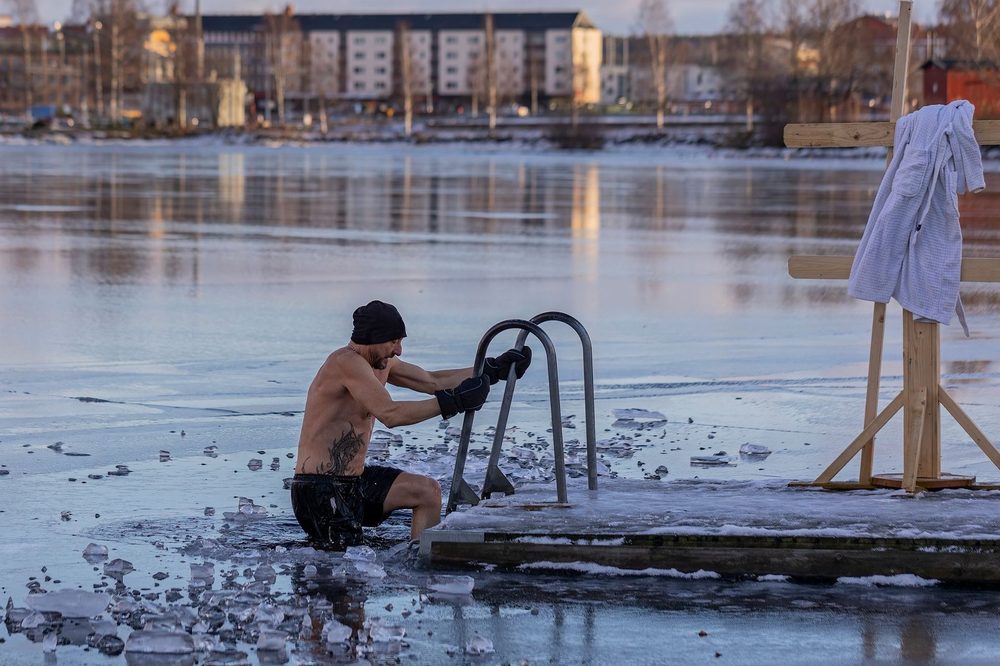
The cold plunge has become a symbol of willpower, and the sauna a must-have step in any "proper" recovery routine. We look at cold plunge benefits and risks, plus cold showers and saunas, through the lens of research: what actually works, what is still just a trend, and how to try heat and cold without unnecessary risk.
Not long ago, jumping into icy water was something people did once a year for a polar bear plunge. Today they set up an ice tub on the balcony and film it for their stories. Cold and heat have turned into a test of willpower: whoever lasts longest wins. The uncomfortable truth is that the science here is far more modest than social media — and sometimes it plainly says "not now."
Cold plunge benefits and risks: what does the science say?
There are benefits, but they are milder and shorter-lived than influencers promise, and the risks are very real.
A 2025 review in PLOS One pooled 11 randomized trials with 3,177 participants. Cold-water immersion was linked to lower stress 12 hours later, as well as better sleep quality and quality of life — but not better mood. At the same time, right after immersion and an hour later, inflammation markers actually went up, and the authors themselves note that the studies are few, small and mostly involved men.
Ice bath after a workout: does it help or hurt?
It depends on your goal. Cold may ease the feeling of heavy, tight muscles, but if you train for strength and muscle, an ice bath straight after the gym works against you.
According to Cleveland Clinic, cold-water immersion within 4 hours of strength training may interfere with muscle growth by dampening the signals that build muscle. On rest days or after a long cardio session, cold makes more sense.
The takeaway is simple: not "an ice bath after every workout," but "cold on the right day." How to spread heat and cold across your week so they don't cancel each other out is laid out in the PDF that comes with this article — along with a safety check and a how-I-feel journal.
Questions and answers
Cold plunge benefits and risks: which outweighs which?
Why take an ice bath after a workout?
Are cold showers good for you?
Sauna benefits and risks: what happens in your body?
Read also
Sources
- Cleveland Clinic — Are 'Cold Plunge' Ice Baths Good for You?
- PLOS One — Effects of cold-water immersion on health and wellbeing: A systematic review and meta-analysis (2025)
- Buijze G.A. et al. — The Effect of Cold Showering on Health and Work: A Randomized Controlled Trial (PLOS One, 2016)
- Harvard Health Publishing — Sauna health benefits: Are saunas healthy or harmful?