Stress in dogs: how to help your dog cope with storms, guests and moving house
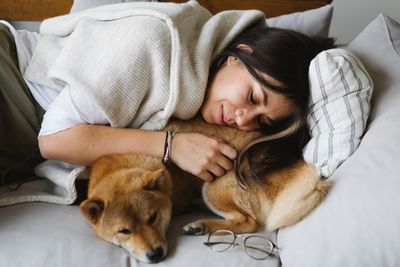
Stress in dogs shows up as trembling, trying to hide, barking for no reason or refusing food. We've gathered practical ways to help your pet get through storms, guests, a move and other anxious situations.
Stress in dogs is a natural reaction to things they don't understand: loud noises, changes, new people. You can help in the moment, with a safe hiding place and your own calm, and in the long run, through gradual desensitization and a stable routine.
Dogs cope with uncertainty worse than we do: they don't understand that the storm will end in an hour and the guests will leave in the evening. The result is anxious behavior that scares owners too.
Stress in dogs: signs to watch for
A dog shows anxiety through body language and behavior, so it's important to notice early signals before she starts to panic.
- Trembling, pinned-back ears, a tucked tail.
- Yawning when not sleepy, lip licking.
- Trying to hide or, on the contrary, refusing to leave the owner's side.
- Barking, whining, restless pacing around the house.
- Refusing food or treats.
What are the most common causes of stress in dogs?
Most often it's loud noises and changes to everyday life.
- Loud noises: thunderstorms, fireworks, construction outside.
- Moving house and a change of familiar surroundings.
- Separation from the owner, even for a short time.
- New people or animals in the home.
- Unfamiliar routines: grooming, trips, vet visits.
How to reduce stress in dogs naturally, in the moment?
Give your dog a safe place and stay calm yourself; that's the main thing you can do right now.
- Set up a hiding place: a closed room or a crate with favorite things.
- Close the curtains and turn on background sound to muffle the storm.
- Don't scold your dog for anxious behavior; it only increases stress.
- Offer a chew toy or a treat if your dog is willing to take it.
Many owners notice that gentle, even pressure on the body, for example from special vests, calms a dog. Read more about thunderstorm fear from the American Kennel Club and the Animal Humane Society.
Stress in dogs after moving house: how can you help?
A new home means lots of unfamiliar smells and sounds all at once. Everything familiar helps: belongings, routine, rituals.
- Set up your dog's spot right away with her bed, bowls and toys.
- Keep the usual feeding and walking times.
- For the first few days, walk the same routes, gradually widening the territory.
- Don't leave your dog alone for long in the first days.
If the move involves a long journey, the tips in "Traveling with a pet" will come in handy.
What helps in the long run?
Gradually getting a dog used to scary sounds with recordings played at low volume, a calm owner and a stable daily routine lower a pet's overall anxiety level.
- Regular walks and enough physical exercise.
- Scent games and snuffle mats, which have a calming effect.
- Short obedience sessions with rewards.
How walking a dog benefits the owner too is covered in "Walking a dog". And if an anxious dog passes the tension on to you, try these breathing exercises for stress.
How do you prepare a dog for a new baby in the home?
Start early, before the baby is born: gradually change the routine the way it will change later, and let your dog get to know new items and sounds. Once the baby arrives, keep up the walks and at least a few minutes of attention just for the dog; that makes it easier for her to accept the changes.
When do you need a specialist?
If the stress doesn't go away, gets worse or interferes with your dog's normal life, don't try to cope alone.
Owners of anxious and senior pets ask us about AcuLife, a version of LifeWave technology for animals that, according to the company, is used to support activity and recovery. We cover it in "AcuLife: what owners need to know"; talk to your vet before using it. For caring for older dogs, see "Senior dog care".