Long Flights: How to Avoid Swelling, Dehydration, and Leg Blood Pooling
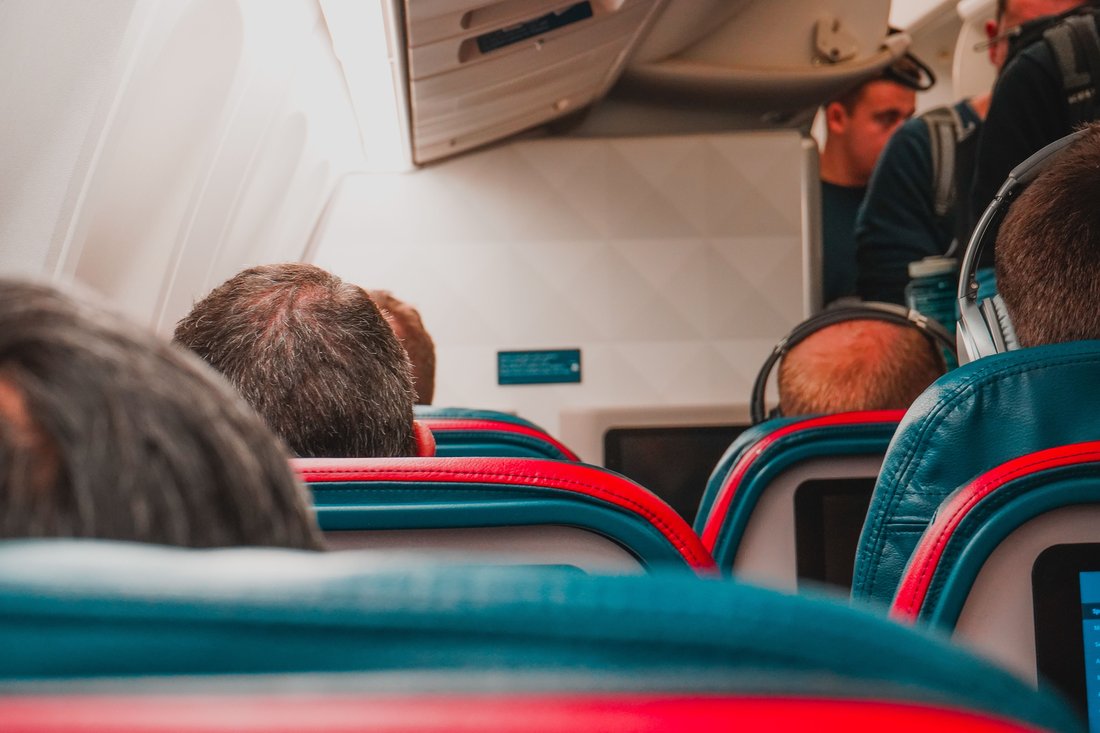
Long flights are a test for the body: dry cabin air, hours without moving and lower cabin pressure. Here's how to prepare, what to bring and how to land without swollen legs and a heavy head.
Long flights wear you out because of three factors combined: cabin air is drier than a desert, the pressure is lower than you're used to, and hours of sitting still slow blood flow in your legs. Most of the unpleasant after-flight feelings — swelling, dryness, heavy legs — come from these, not from flying as such. The good news: almost all of it can be eased with simple habits.
Why are long flights so tiring?
Cabin humidity is usually 10–20%, while around 40–50% is considered comfortable. The body loses moisture faster through breathing and skin.
- Dry air — skin, lips, eyes and mucous membranes dry out.
- Sitting still — blood returns from the legs more slowly, and swelling appears.
- Lower cabin pressure — many people get a heavy head by the end of the flight.
- Crossing time zones — sleep gets thrown off; see our article on jet lag.
How do you prepare for a long flight?
Preparation starts a day or two before departure: get enough sleep, drink enough water and go easy on salty food. These simple steps make the flight itself noticeably easier.
- Go to bed on time the night before, and don't leave packing until late at night.
- Drink water throughout the day, not just at the airport.
- Limit salty food — too much salt makes swelling worse.
- Choose an aisle seat if you plan to get up often.
- If you have risk factors for blood clots, discuss the flight with your doctor in advance.
Think about departure time too. A night flight works better if you sleep well sitting up, a daytime one if you can't sleep on planes. Try to leave for the airport with time to spare: rushing and pre-flight stress also make a long flight harder.
Long flights essentials: what should you bring?
Bring things that help you drink, move and sleep. Carry-on must-haves for a long flight usually look like this:
- an empty bottle you can fill after security;
- moisturizer and lip balm;
- comfortable shoes or warm socks to change into;
- an eye mask, earplugs and a neck pillow;
- a light snack without too much salt — ideas in our article on eating while traveling.
How do you get through a long flight without dehydration?
Drink water regularly in small amounts rather than one big glass every few hours. It's best to limit alcohol and strong coffee on board: they increase fluid loss.
We covered how much water you need on ordinary days in our article on how much water to drink. In flight, aim a little higher because of the dry air.
Don't forget your skin: dry air dries it out more than usual. Apply moisturizer before takeoff and reapply midway through the flight, and if your eyes feel dry, give them a break from the screen and close them more often.
How do you reduce blood pooling in your legs?
The key is movement, even in a cramped seat. The CDC and the NHS say so directly.
- Get up and walk the aisle every 1.5–2 hours, if possible.
- Do ankle circles and ankle flexes while seated.
- Consider compression socks on flights longer than 4–5 hours, especially if you have risk factors.
- Don't keep your legs crossed for long — it makes it harder for blood to flow back.
What should you do after landing?
Take a walk, drink some water and try to switch to local time as soon as possible. A short walk in daylight helps both your legs and your internal clock.
If your legs did swell, lie down for 10–15 minutes with them propped up on a pillow and do a few ankle circles. Mild swelling usually goes away during the day once you're walking again.
At home, before and after a trip, the X2O system is a convenient way to prepare drinking water: it filters ordinary water and infuses it with light, and according to the company it supports hydration and overall well-being. After a long day on the road, many people apply a couple of IceWave patches — the company positions them for comfort in movement. But the main prevention in flight is simple, regular movement right in your seat.