Long Flights: How to Avoid Swelling, Dehydration, and Leg Blood Pooling
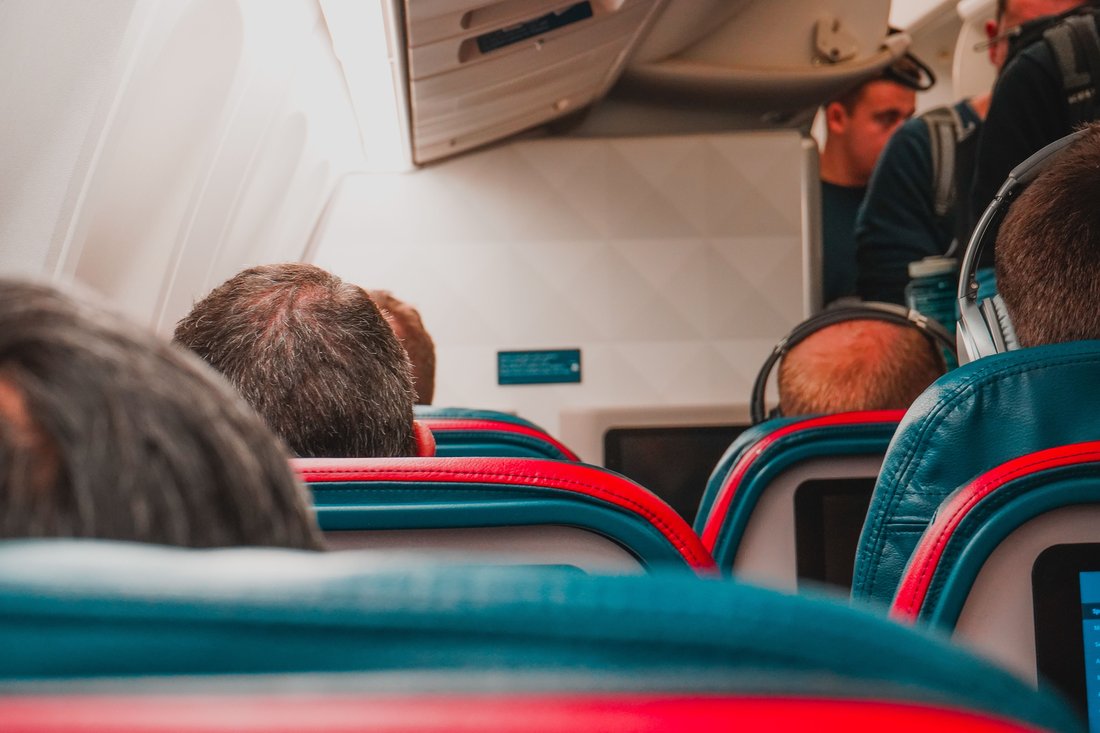
Dry cabin air, immobility, and low pressure make a long flight a real test for the body. We break down what actually helps you land without swollen legs and a heavy head.
An airplane cabin is an unusual environment for the body: the air is drier than a desert, pressure is lower than usual, and prolonged immobility slows blood flow in the legs. Most of the discomfort after a long flight — swelling, dryness, heavy legs — comes from exactly this combination of factors, not from flying itself.
Dehydration in Flight
Cabin air humidity is usually 10–20%, while a level of around 40–50% is considered comfortable for the body. This speeds up moisture loss through breathing and skin. You can offset this by drinking water regularly in small amounts, rather than one large glass every few hours.
How to Reduce Blood Pooling in the Legs
- Stand up and walk the aisle every 1.5–2 hours, if possible.
- Rotate your feet and flex your ankles while seated — this works even in a cramped seat.
- Consider compression socks for flights longer than 4–5 hours, especially with risk factors.
- Avoid crossing your legs for long periods — it further restricts blood flow.
What to Bring With You
- A water bottle you can fill after passing security.
- Moisturizer and lip balm — dry cabin air dries out skin noticeably more than usual.
- Comfortable shoes that are easy to take off — many people's feet swell slightly during a flight.
It's also worth paying attention to adjusting to a new time zone — read more about that in the article on jet lag.
To stay hydrated on a long journey, it's convenient to bring an X2O bottle along, and to ease heaviness in the legs after landing, IceWave gel. But the main prevention is simple, regular movement right there in your airplane seat.