Signs of aging in dogs: your dog is getting older faster than you notice
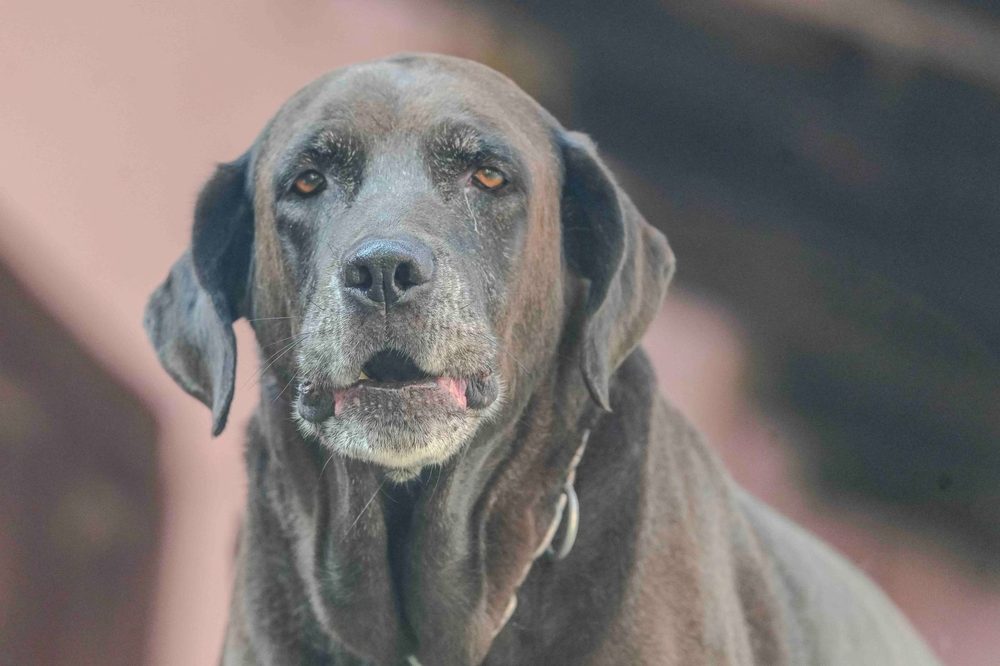
The signs of aging in dogs creep in quietly: yesterday a puppy, today "just calmer." Let's look at when a dog is considered a senior, how old your dog really is in human years and how to tell your dog is aging while the changes can still be supported.
"He's just calmer now." "She's growing up, she doesn't tear around like she used to." "He's getting lazy." Almost every owner says something like this — and almost none use the word "old." The uncomfortable truth: your dog is aging faster than we tend to think, and the first signs are easy to mistake for personality. Getting old isn't a sentence for a dog, but it's better to notice it a year early than a year late.
How old is your dog in human years?
Older than the "multiply by 7" rule suggests. Scientists at the University of California San Diego built an "epigenetic clock" — comparing chemical tags on the DNA of dogs and humans — and found that by this clock a 1-year-old dog corresponds to roughly a 30-year-old human, and a 4-year-old dog to about a 52-year-old.
After that the pace changes: after age 7, aging in dogs slows down noticeably. In other words, a dog goes through the fastest stretch of its life while we still think of it as young.
An honest caveat: the clock is based on data from 105 Labradors and still needs to be tested in other breeds — some breeds are known to live longer than others. But the main takeaway is clear: there's no linear formula, and "five is still young" is far from always true.
At what age is a dog considered a senior?
It all depends on size: the bigger the dog, the earlier. According to the American Kennel Club (AKC):
- small breeds become seniors at around 8–12 years;
- giant breeds as early as 6–7 years;
- the general rule is the last quarter of the expected lifespan: for example, Labradors, which live 11–13 years, become seniors at around 8–9.
So you don't have to guess, we've put a senior pet checklist into the PDF for this article: 20 signs across five zones — movement, sleep, weight, senses and behavior, teeth and coat — a table of senior age by size and a one-month care plan.