Alcohol and sleep: why a glass of wine knocks you out — but steals your recovery
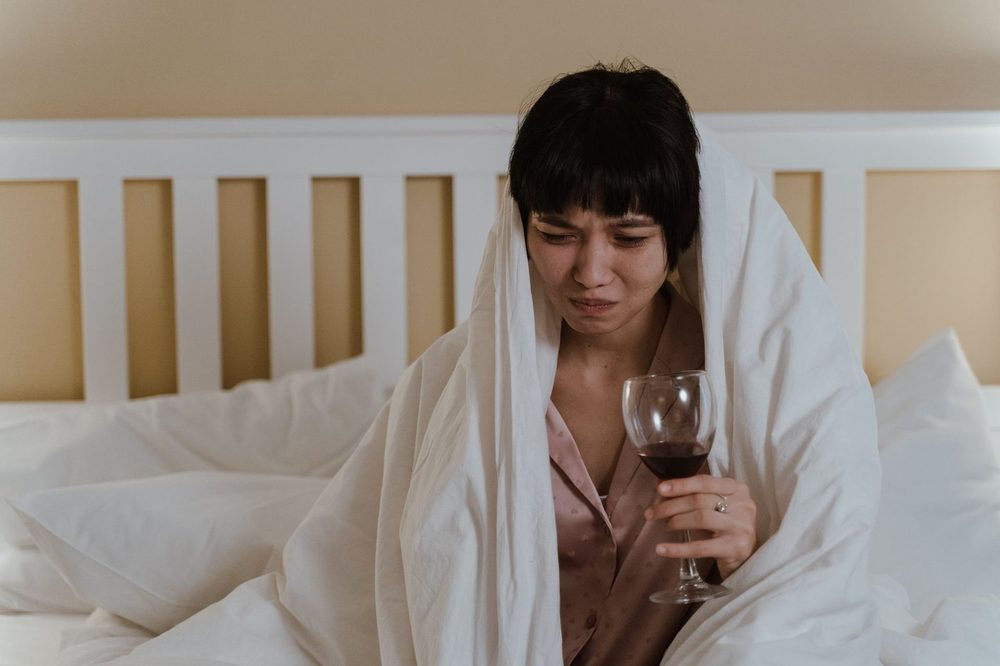
Alcohol and sleep seem like allies: after a glass, you fall asleep faster. But the morning says otherwise — early wake-ups, a heavy head and the feeling that the night was wasted. We look at why alcohol makes you sleepy, why you then wake up early, and what the data shows about heart rate and recovery during sleep.
“One glass of wine and I sleep like a baby.” Everyone has heard it. But more and more people are checking it against their wristbands and rings — and seeing a different picture: higher heart rate, lower recovery. According to Google Trends, US interest in “alcohol and sleep” has roughly tripled since 2022, and the sober curious movement — cutting back on alcohol mindfully, without going to extremes — has become one of the noticeable trends. We’re not going to lecture you. Let’s just look at what a glass does to your night.
Why does alcohol make you sleepy?
Because alcohol acts as a sedative and really does shorten the time it takes to fall asleep (Sleep Foundation). Hence the feeling that it “helps you sleep.”
But that’s a trap. Falling asleep is only the first few minutes of the night, while recovery happens over the next seven or eight hours. The Sleep Foundation calls this effect an illusion of sleep help (Sleep Foundation).
Why do you wake up early after drinking?
As your blood alcohol level falls, the second half of the night has more of the lightest sleep stage, and you wake up more often — sleep becomes fragmented and poor in quality (Sleep Foundation).
Hence the familiar scenario: you fell asleep in five minutes, and at four in the morning you’re lying there with your eyes open, heart pounding, thoughts racing. Alcohol also cuts down on REM sleep — the phase linked to memory and emotional processing of the day — which is one reason for sluggishness and poor concentration the next morning (Sleep Foundation). More on nighttime wake-ups in our article “Awake at 3 a.m.”.
As for how noticeable this is: in a Sleep Foundation survey, almost 90% of people who regularly drink in the evening reported at least one sleep problem (Sleep Foundation).
Checking it on yourself is easier than it seems. In the PDF for this article, we’ve put together the “30 evenings” experiment: a sleep and heart rate tracker and a checklist for alcohol-free evenings — so you can see the difference in your own numbers, not someone else’s.