Indoor cat activity: enrichment ideas to keep your pet active
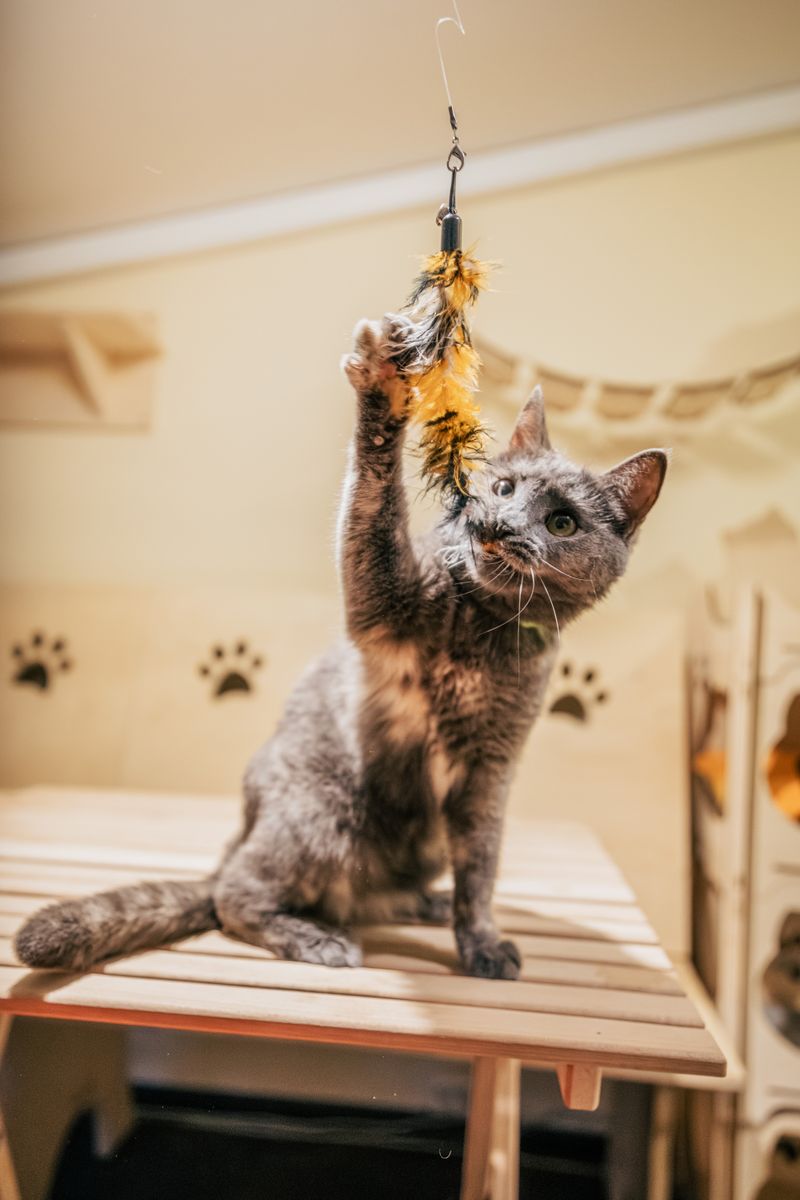
Indoor cat activity depends on whether your cat has a reason to hunt, climb and explore. Here is how to bring play, hunting and movement back into her day with simple tools.
Indoor cat activity is easy to support if you give your cat what nature built her for: hunting, climbing and exploring. Short daily hunting games, vertical space and a predictable routine all help.
In the wild, cats spend a large part of the day hunting: stalking, pouncing, catching prey. An indoor cat doesn't lose this behavior; she simply often lacks a reason to show it. The result is lethargy, extra weight and sometimes destructive behavior such as scratching furniture.
Why does a cat become less active indoors?
The main reason is a monotonous environment: everything is familiar, food appears by itself and there is nothing to hunt. The cat saves her energy because there is no reason to spend it.
- Few new smells, sounds and places to explore.
- No way to climb up high and survey the territory.
- Food sits in the bowl all day and takes no effort.
- The owners spend a lot of time away from home.
Enrichment ideas for indoor cats are collected by AAHA and VCA Animal Hospitals.
Indoor cat play ideas: how to boost activity through play
Short games that resemble hunting work best: stalk, pounce, catch. Aim for 2–3 sessions a day of 10–15 minutes each.
- Wand toys with feathers or fabric imitate prey better than a ball that lies still.
- A laser pointer is good for the chase, but always end the game with a toy she can actually grab, so your cat "catches the prey".
- Rotate toys: put some away for a week, then bring them back and they'll be interesting again.
- Move the toy "like prey": hide it behind objects and draw it away from the cat rather than poking it in her face.
How can you turn feeding into a hunt?
Food puzzles and slow-feeder mats make a cat search for and work for her food. This adds movement and keeps her busy while you're out.
- Scatter part of the dry food in different spots around the home.
- Use puzzle feeders or simple homemade versions made from boxes.
- Don't leave a full bowl out all day, as it lowers interest in both food and movement.
Why does a cat need vertical space?
Shelves, scratching posts and elevated cat houses give a cat a view and a sense of safety. This is especially important in multi-cat homes, where vertical space reduces competition for territory.
- Place scratching posts next to the spots where your cat likes to sleep.
- Create a "route" across shelves or furniture so she can move around without touching the floor.
- Put a bed by the window, since watching the street is stimulating too.
How do you calm a cat that races around at night?
Night-time activity often means your cat didn't get enough exercise during the day. The answer isn't prohibitions but shifting that activity to the evening.
- Schedule the most intense play session an hour or two before you go to bed.
- Feed after play, since a cat with a full stomach falls asleep more readily.
- Don't respond to night-time zoomies with play or food, so you don't reinforce the habit.
Cats love a predictable routine: set times for play, feeding and rest. Sudden changes in their surroundings, such as moving house, new furniture or guests, can temporarily lower or, on the contrary, increase your pet's activity. How cats sleep and how much rest they need is covered in "Pet sleep: how much do cats and dogs sleep".
When is lethargy a reason to see the vet?
If the drop in activity appeared suddenly or comes with other changes, it's no longer about boredom.
Lack of movement often goes hand in hand with extra weight; read more in "Excess weight in cats and dogs". And for how spending time with a cat affects owners themselves, see "Cats and stress relief".
Owners of active and senior pets often ask us about AcuLife, a version of LifeWave technology adapted for animals. According to the company, it is used to support pets' mobility and activity. We explained what it is and how it's used in "AcuLife: what owners need to know"; talk to your vet before using it.