Eye Strain From Screens: The 20-20-20 Rule and Other Simple Measures
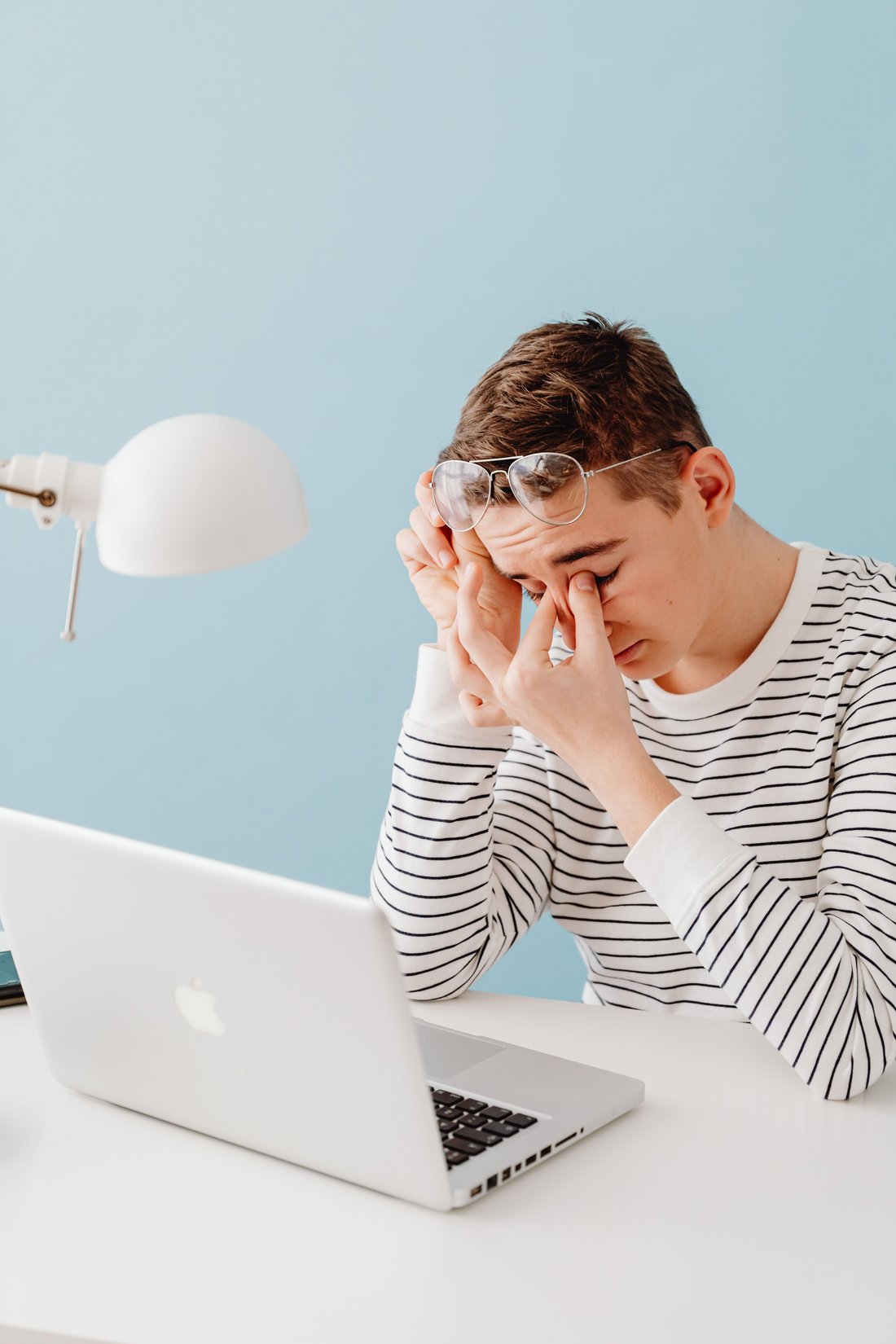
Eye strain from screens — dryness, burning and blurry vision by the end of the workday — is familiar to anyone who spends 8 or more hours in front of a monitor. Here are simple habits that genuinely ease the load on your eyes.
Eye strain from screens happens not because screens are especially harmful, but because of how we use them: we stare at close range for long periods, blink less and sit in poor lighting. The good news is that most ways to ease it require nothing but a habit. The main one is the 20-20-20 rule.
What causes eye strain from screens?
Eyes get tired from long close-up focusing, infrequent blinking and poor lighting. This cluster of symptoms is called digital eye strain.
- Constant close focusing keeps the eye muscles tense.
- At a screen we blink less, and our eyes dry out.
- A screen that's too bright or too dim, glare from a window.
- The wrong glasses or undetected changes in vision.
- Dry indoor air from air conditioning or heating.
The causes are covered in detail by the American Academy of Ophthalmology and Mayo Clinic.
What is the 20-20-20 rule?
Every 20 minutes, take a 20-second break and look at something about 6 meters (20 feet) away. This simple shift in focus relaxes the muscles that stay tense during close-up work.
You can look out a window, down a hallway or at a far wall. The key is not to look at another screen.
The rule is the same for your phone. When scrolling on public transit or in line, look up and into the distance from time to time — it takes a few seconds but noticeably reduces the strain.
How to reduce eye strain from screens at the computer?
Breaks, conscious blinking and short screen-free pauses help. These steps work throughout the workday:
- consciously blink more often — especially while reading and watching videos;
- every hour or hour and a half, get up for a few minutes and look into the distance;
- close your eyes for 20–30 seconds when you feel a burning sensation;
- air out the room and keep an eye on humidity;
- go outside at lunch — daylight and distant focus give your eyes a rest.
If by evening it's not just your eyes but your head that's tired, read our article on tension headaches.
How do you set up your workspace?
Keep the screen at arm's length and slightly below eye level, with brightness matched to the room lighting. A well-set-up workspace eases the load not only on your eyes but on your neck too.
- Distance to the monitor — about an arm's length.
- Top edge of the screen — at eye level or slightly below.
- Screen brightness — roughly the same as the surrounding light.
- Window — to the side, not behind you or directly behind the monitor, to avoid glare.
- A larger font beats squinting.
How to sit so work doesn't drain your energy — see our article on posture at the computer.
How do screens at night affect sleep?
Screens in the evening can make it harder to fall asleep: bright light and engaging content shift your sense of time. How much of this is about blue light — see our article on blue light and sleep.
If screens fill your whole day, try ideas from our article on digital detox — many people notice the difference of even one phone-free hour before bed within a week.
If you work in the evening, lower the screen brightness and switch on warm color mode. It doesn't replace breaks, but it makes evening light gentler on your eyes.
When do you need an eye doctor?
Get your eyes checked at least every 1–2 years, and sooner if you have discomfort. Sometimes "tired eyes" come down to the wrong glasses or age-related changes, which we wrote about in our article on vision as you age.
If tired eyes in the evening go hand in hand with trouble falling asleep, a calm screen-free wind-down routine an hour before bed helps. Some people add the Silent Nights patch to it: according to the company, it helps you relax after the day, and relaxation improves sleep quality. But measure number one stays simple — regular breaks throughout the day.