Evening Workouts and Sleep: Can You Train at Night and Still Sleep Well
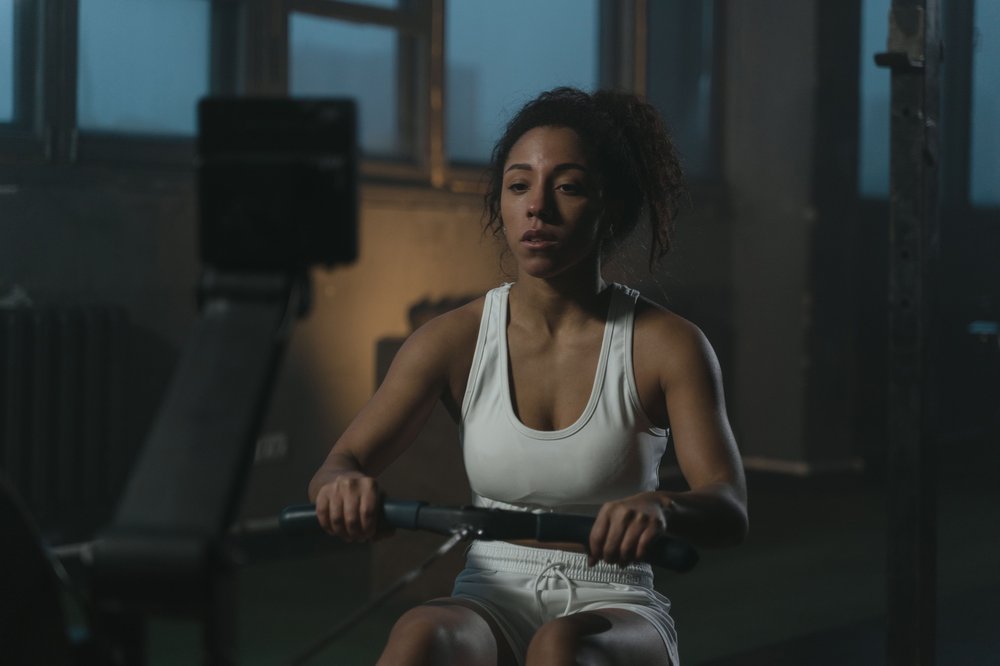
Evening workouts and sleep can go together — and for many people the evening is the only free window for exercise. Here's how training affects sleep, whether it does any harm and how to plan your evening so a workout and good rest don't clash.
Evening workouts don't hurt sleep for most people, as long as you train at a moderate level, finish the intense part early and leave time for a cool-down. Recent research paints a mild picture: problems mainly come up with very hard training right before bed or in people who are especially sensitive to evening activity.
For a long time, training in the evening was considered a bad idea. Let's look at what has changed and how to plan your evening the right way. For many working people, the evening is the only time for exercise, and giving it up for fear of poor sleep usually isn't necessary: a few simple rules are enough.
Does exercising at night affect sleep?
For most people, the effect is neutral or even positive. A systematic review of studies found no clear harm to sleep from evening exercise in healthy people, as long as the workout ends at least an hour before bed and isn't extremely intense — more in the review.
Regular physical activity in general is linked to better sleep, notes the Sleep Foundation. So training in the evening is better than not training at all.
Why does an evening workout sometimes keep you awake?
Because intense exercise temporarily "revs up" the body, while sleep requires it to calm down.
- Intense exercise raises your body temperature and heart rate, while falling asleep requires the body to cool down a little.
- The adrenaline rush after a hard workout feels like alertness, even when you're physically tired.
- Bright gym lighting late in the evening can shift your internal clock further — more in our article "Blue light and sleep".
Late evening exercise and sleep: harm or myth?
Mostly a myth, if we're talking about reasonable training. The real risks aren't tied to the time of day but to intensity and how you wrap up the session.
- Sprints, hard intervals and competitive games right before bed are the most "energizing" option.
- Moderate cardio, medium-intensity strength training, yoga and stretching are usually well tolerated.
- Sensitivity is individual: go by your own sleep, not general rules.
Working out in the evening or in the morning: which to choose?
The best time is the one you can stick to regularly. Consistency matters more than the perfect hour.
- Morning works if your evenings are busy or you notice that you take a long time to fall asleep after exercise.
- Evening is convenient if it's hard to get going in the morning and you want to "shake off" tension after work.
- You can combine them: intense days in the morning or afternoon, light ones in the evening.
The main thing is to reach the recommended weekly activity; the NHS gives guidelines for adults.
How to work out in the evening and still sleep well?
A few simple rules help reduce the post-workout "rev."
- Finish the intense part 2–3 hours before bed.
- Add a calm cool-down and stretching — they lower your heart rate. Read how to stretch properly in our article "Stretching before and after a workout".
- After your workout, dim the lights at home and avoid bright screens.
- A warm shower or bath helps your body gradually cool down afterward — more in our article "Hot bath before bed".
- Give yourself 30–60 minutes to transition from activity to rest.
How to recover after an evening workout?
Recovery means sleep, nutrition and rest days. After an evening session, don't skip dinner, but don't eat a heavy meal right before bed either. We explain why there's no progress without rest in our article "Rest days from training".
If you train regularly, the LifeWave X49 patch is worth a look: it's applied in the morning on a training day, and according to the company, it supports endurance and helps shorten recovery time after exercise — more in our article "X49 patch: how it works". And to switch to rest more easily after an active evening, many people use Silent Nights patches as part of their evening ritual before bed.