How much water do you really need to drink a day?
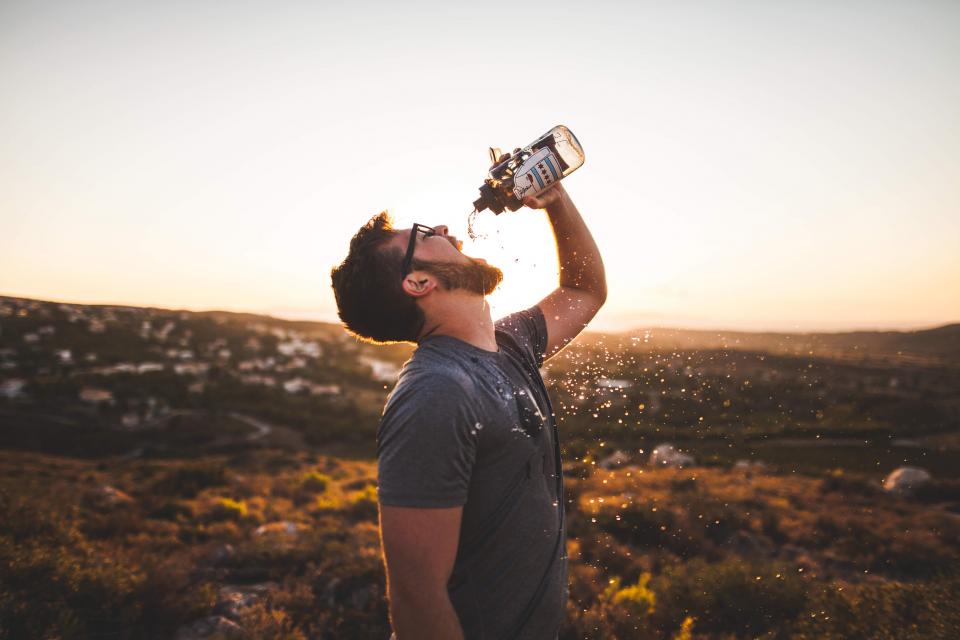
How much water to drink a day — eight glasses or less? We look at what your water needs depend on and how to tell if you're drinking enough.
How much water to drink a day? The UK's National Health Service (NHS) suggests aiming for 6–8 glasses — about 1.5–2 liters (roughly 50–68 fl oz) of fluid (NHS). In hot weather, during workouts and while traveling your needs go up, and tea, soups and vegetables count toward the total too.
Water is involved in almost every process in the body: it regulates body temperature, carries nutrients and supports your kidneys and joints. Even mild dehydration — a loss of 1–2% of body weight — can show up as tiredness, headaches and poorer concentration.
How much water should an adult drink a day?
The guideline is 6–8 glasses of fluid a day. That's not only water: tea, coffee, milk and soups count as well.
We get some of our fluid from food — especially vegetables and fruit. So there's no point forcing yourself to drink an exact amount of plain water: it's more important to drink regularly and listen to your body's signals.
How much water to drink a day based on weight?
Formulas like "so many milliliters (or ounces) per kilogram (or pound)" are common, but they're only a rough estimate. A larger and more active person usually needs more fluid, but heat, exercise and diet matter just as much as weight.
It's more reliable to go by the general guideline and how you feel: thirst, the color of your urine and how active you are today.
How much water should you drink a day in hot weather?
In hot weather you need to drink more: your body loses water through sweat to cool down. Drink little and often, without waiting until you're very thirsty.
- In the heat and on a plane the air is dry and losses go up.
- In the mountains and on an active trip (see "How to prepare for hiking in the mountains").
- When you have a cold or a fever.
If you work out in hot weather, read "Exercising in hot weather".
How many liters or ounces of water a day does an athlete need?
There's no exact number for everyone: an athlete needs more fluid than someone who doesn't exercise, and how much exactly depends on the length and intensity of the workout and the weather.
The main rule is to drink before, during and after exercise. Thirst and urine color are easy ways to keep track, and after a long workout replace the losses gradually rather than all at once.
How can you tell you're drinking enough water?
The simplest guide is the color of your urine: pale straw means everything is fine, dark means it's time to drink.
Thirst is a signal too, but it weakens in older adults, so they're better off drinking on a schedule: a glass in the morning, with every meal and in between.
Which drinks are best avoided?
Sugary sodas and juices provide a lot of sugar without making you feel full (WHO). Energy drinks and lots of coffee through the day can interfere with sleep. The best choice is plain water, with lemon, mint or berries if you like. A good morning starts with a glass of water and a filling breakfast.
How do you drink enough water if you keep forgetting?
Tie drinking to your usual routines and make water convenient. Then you'll reach your target without effort.
- A glass of water right after waking up.
- A glass with every meal.
- A bottle on your desk and in your bag.
- A phone reminder for the first few weeks.
- More vegetables, fruit and soups in your diet.
If plain water seems boring, add a slice of lemon or cucumber or a few mint leaves — no sugar.
Drinking on a schedule is especially helpful for older adults: the sense of thirst weakens over the years, and the body can quietly end up short on water.
Coffee and tea count too, but it's better if plain water remains the basis.
By the way, drinking enough water is part of LifeWave's recommendations for people who use X39 patches (more in "X39 patch: how it works and placement"). And for the home, the company offers the LifeWave X₂O system: it filters tap water and infuses it with light — the company calls this Light-Infused Water. The filters are replaced about every six months — as a set or individually: the primary and secondary filter. More about the system in "LifeWave X₂O: what Light-Infused Water is".