Nordic walking: technique, benefits and how to choose your poles
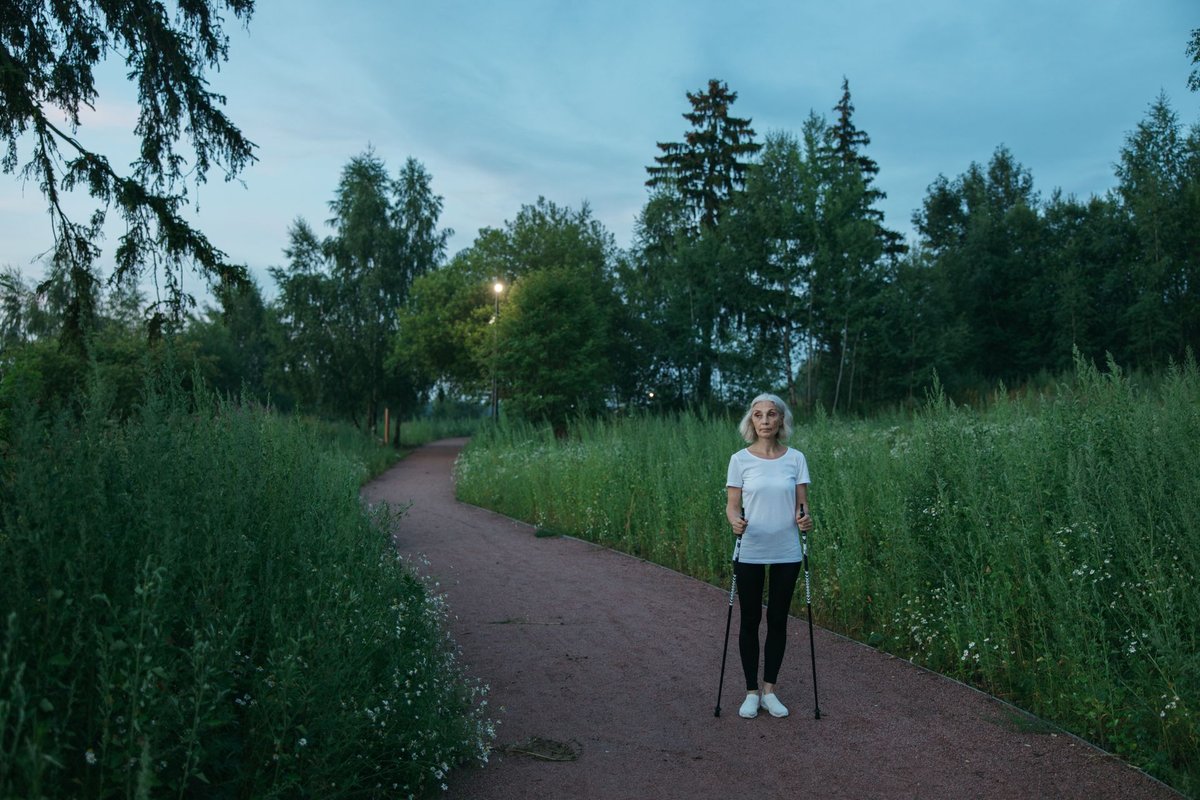
Nordic walking turns an ordinary stroll into a full-body workout. Here is how to walk with poles correctly, what the benefits are and how to match pole length to your height.
Nordic walking comes from Finland and has long been popular in Germany and other European countries, and it’s now a more and more common sight in parks and along waterfronts. It’s the same walk, but with poles that bring your arms, shoulders and back into the movement.
What is the correct Nordic walking technique?
The key is a natural stride and arms swinging in opposition, just as in ordinary walking. The pole isn’t simply moved along — it pushes you back and down.
- Your right arm swings forward with your left leg, and vice versa.
- The pole is planted at an angle, roughly level with the middle of your stride, tip pointing back.
- Push off with the pole and slightly open your hand at the end of the movement; shoulders relaxed, back straight.
- SportMedBC recommends taking a lesson with a certified instructor to start: proper technique makes a big difference to the benefits.
What are the Nordic walking benefits?
A systematic review in PubMed combining 16 randomized and 11 observational studies found favorable effects of Nordic walking on resting heart rate, blood pressure, endurance and quality of life. According to the authors, on several measures it outperformed brisk walking without poles.
Nordic walking poles vs trekking poles: what length do you need?
The guideline is about 70% of your height, according to SportMedBC; at 5 ft 7 in (170 cm) that’s roughly 115–120 cm. The check is simple: stand the pole upright next to your foot — your elbow should be bent at about a right angle. Unlike trekking poles, Nordic poles usually have a glove-like strap and an angled rubber tip for pushing off.
Nordic walking is a natural extension of simple walking, easy to fit in at any age; exercises for stability and balance are in our article Balance and fall prevention. To make it easier to get out for a walk, many people choose Y-Age Carnosine — according to the company, it supports motivation to move — and IceWave patches for comfort in movement.