Pilates for beginners: how to start at home and how it differs from yoga
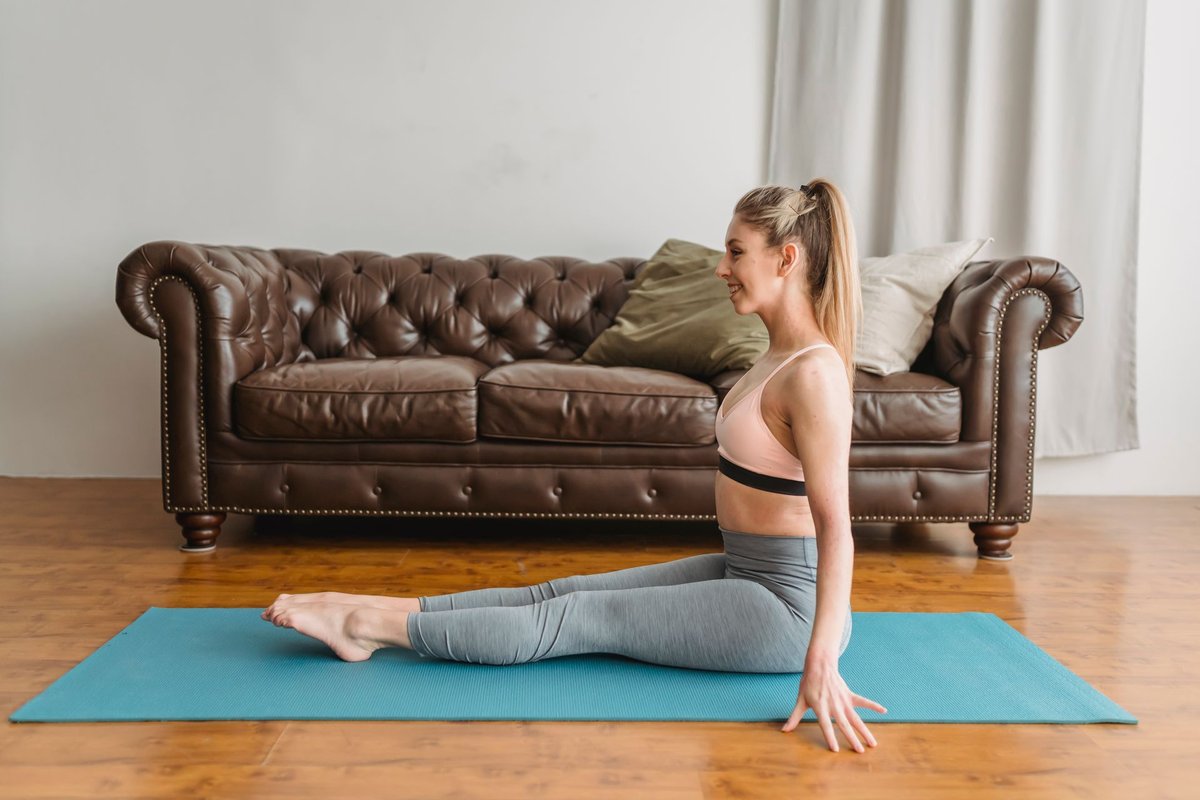
Pilates for beginners means calm, precise exercises for your core, posture and flexibility. Here's how to start at home, which exercises to choose, whether Pilates suits people over 50 and how it differs from yoga.
Pilates for beginners means calm, precise mat exercises that strengthen your core, help you hold good posture and get in tune with your body. You can start at home with 1–2 sessions a week of 20–30 minutes, without special flexibility or expensive equipment. The method was created by Joseph Pilates in the early 20th century, combining, according to Healthline, ideas from yoga, ballet, meditation and martial arts.
Pilates for beginners at home: where to start?
Start with a thick mat and attention to your breathing. For the first few weeks, focus on technique, not the number of reps.
- As Healthline advises, a regular yoga mat may be too thin for Pilates — a thicker one is better.
- Work out in comfortable clothes, barefoot or in non-slip socks.
- If you can, take a few introductory sessions with an instructor to set up your technique.
- Pick a regular time for your sessions, such as a weekend morning or an evening after work.
- Beginner video lessons where the instructor explains the technique in detail are a good way to start.
What principles is Pilates based on?
There are six: centering, breathing, concentration, precision, control and flow. They're all about the quality of movement, not speed.
- Centering — movement starts from the core muscles.
- Breathing and concentration — you pay attention to every inhale and exhale.
- Precision, control and flow — fewer reps, but done carefully.
Pilates for beginners at home without equipment: exercises
Start with simple mat exercises that engage the whole body. Do 5–8 slow reps of each.
- "Bridge" lying on your back — for the glutes and hamstrings.
- A modified "Hundred" with bent knees — for the abs and breathing.
- "Cat" on all fours — for spinal mobility.
- Alternating arm and leg reaches on all fours — for balance and back muscles.
- Side plank from the knees — for the side muscles of the torso.
A short 15-minute workout
If you're short on time, 15 minutes of Pilates a day is a good start. Consistency matters more than length.
- 2 minutes — calm breathing lying down and "cat."
- 10 minutes — "bridge," modified "Hundred," arm and leg reaches, side plank from the knees.
- 3 minutes — gentle stretching for the back and hips.
To see how short sessions add up to a full workload, read "Micro-workouts during the day".
Every couple of weeks you can add 5 minutes or one new exercise. If your muscles remind you of the workout the next day, that's normal; if they're very sore, ease off.
Is Pilates for beginners over 50 a good fit?
Yes, for many people it's a great choice: the exercise is gentle, with no impact or jumping. The moves can be adapted to any level.
According to Hospital for Special Surgery, Pilates puts less stress on the joints, strengthens the core and improves posture, flexibility and body awareness. Harvard Health also calls Pilates a good workout option as you age. More on flexibility in "Flexibility after 40".
How is Pilates different from yoga?
Both practices combine breathing and movement, but the emphasis differs. Pilates is more about controlled movement, stabilizing muscles and body alignment, while yoga is about holding poses, stretching and a meditative side; more on it in "Yoga for beginners".
You don't have to choose just one: many people combine both practices and take what they like from each.
Pilates complements walking and strength training well; for back care, read "Preventing back pain". To stay consistent more easily, many people choose Y-Age Carnosine — according to the company, it supports motivation to move — and for endurance during more active workouts, the X49 patch.