Plate method: how to build a balanced plate with rice
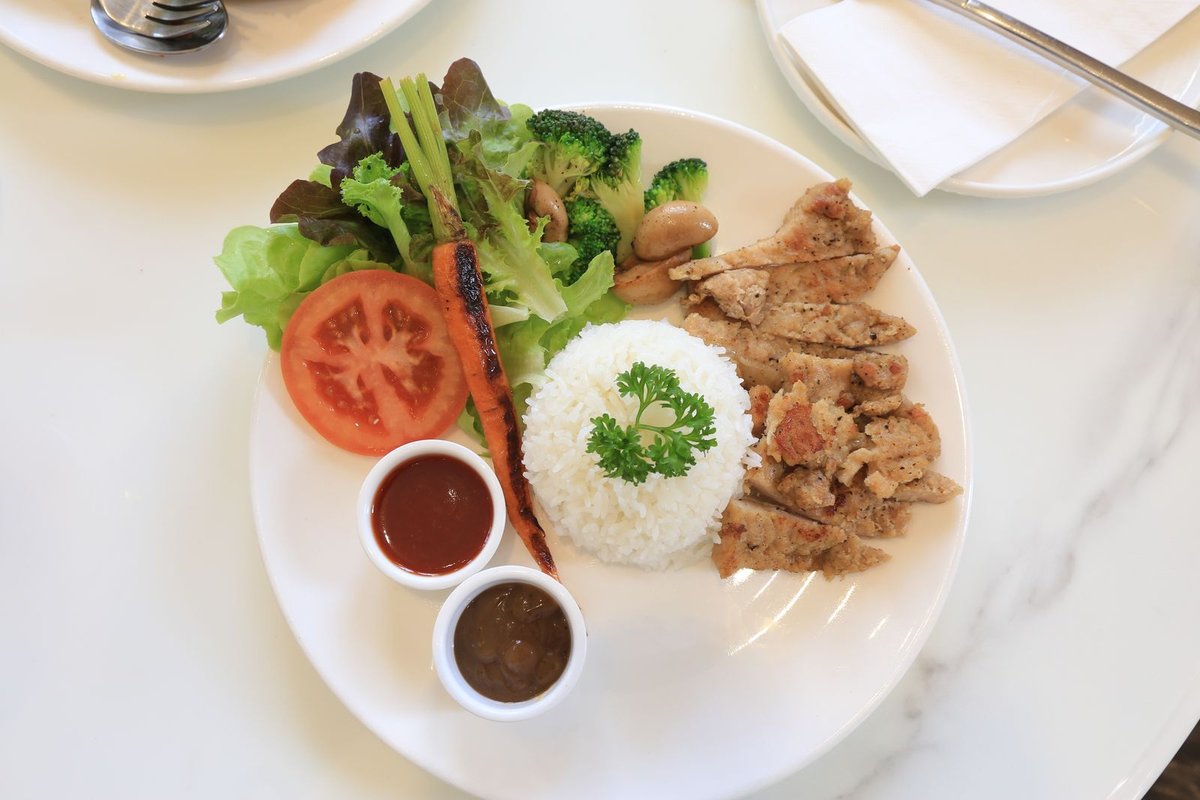
The plate method is a simple way to build a balanced meal without a scale or counting calories. Here is how it works with rice: how much room to give grains, vegetables and protein, plus plate method examples for a whole week.
The plate method is a way to build a balanced meal by eye: half the plate is vegetables, a quarter is grains (such as rice) and a quarter is protein. It's especially useful where rice is the base of almost every meal: in Indonesia, Malaysia, Japan and Uzbekistan. Rice itself isn't a "bad" food, but when it fills the whole plate, the energy doesn't last long and there's too little room for vegetables and protein.
What is the plate method?
It's a visual way to build a balanced meal without scales or counting — just a look at your plate. Mentally divide it into sections and fill each one with the right food group.
The method's main strength is that it works with any cuisine. You don't need to switch to unfamiliar foods: just change the proportions of what you already eat every day.
The Harvard plate method: what's on the plate?
The best-known version is the Healthy Eating Plate from the Harvard T.H. Chan School of Public Health: half the plate is vegetables and fruit, a quarter is whole grains and a quarter is healthy protein (Harvard T.H. Chan School of Public Health).
- Half the plate — vegetables and a little fruit: stewed, steamed, salad, greens.
- A quarter — whole grains: brown rice, buckwheat, quinoa, whole-grain bread.
- A quarter — protein: fish, chicken, eggs, beans and lentils, tofu.
- A little healthy fat: plant oils, nuts, seeds.
- Water or unsweetened tea instead of sugary drinks.
How does rice fit into the plate method?
Rice takes its quarter — roughly a fist-sized portion of cooked grain. Brown rice contains more fiber and other nutrients than white rice because it keeps the outer layer of the grain (The Nutrition Source), (Harvard Health).
- Alternate white rice with brown, red or wild rice.
- Mix rice with other grains or legumes.
- Add vegetables right into the rice: green peas, carrots, herbs.
Why fiber helps you feel full longer is explained in "Fiber and digestion".
Plate method examples with rice
Option one: rice, baked fish and a big serving of stir-fried vegetables. Option two: brown rice, tofu or tempeh, braised greens and cucumbers. Option three: rice with lentils or beans, a fresh vegetable salad and a few nuts.
For more on protein and steady energy, see "Protein in your diet" and "Sugar and energy".
Plate method meals for a week
Planning a weekly menu is easier if you change only one part of the plate and keep the rest familiar. Sample lunches:
- Monday — rice, chicken, braised cabbage and carrots.
- Tuesday — brown rice, baked fish, cucumber and herb salad.
- Wednesday — rice with lentils, vegetable soup, fresh tomatoes.
- Thursday — pilaf with plenty of carrots and a salad on the side.
- Friday — rice, vegetable omelet, green beans.
- Saturday — rice with tofu and stir-fried vegetables.
- Sunday — rice, roast turkey, grilled vegetables.
Breakfasts follow the same principle — ideas in "Healthy breakfast for energy".
Is the plate method good for weight loss?
The plate method isn't a diet and doesn't guarantee weight change, but it helps you keep portions and proportions in check. More vegetables and protein on the plate means feeling fuller with the same familiar food.
It's also worth paying attention to how fast you eat and the size of the plate itself: even perfect proportions on a huge platter mean a big portion.
The plate method is about paying attention to what and how much we eat. For those who want to support a mindful approach to portions, according to LifeWave, the SP6 patch may be a fit, and it's easy to start the day with the Cellergize Morning drink with vitamins and minerals and a balanced breakfast. If you're pregnant, breastfeeding or taking medication, check with your doctor before taking supplements.