Sleep tracker accuracy: how to read your wearable's data without obsessing over numbers
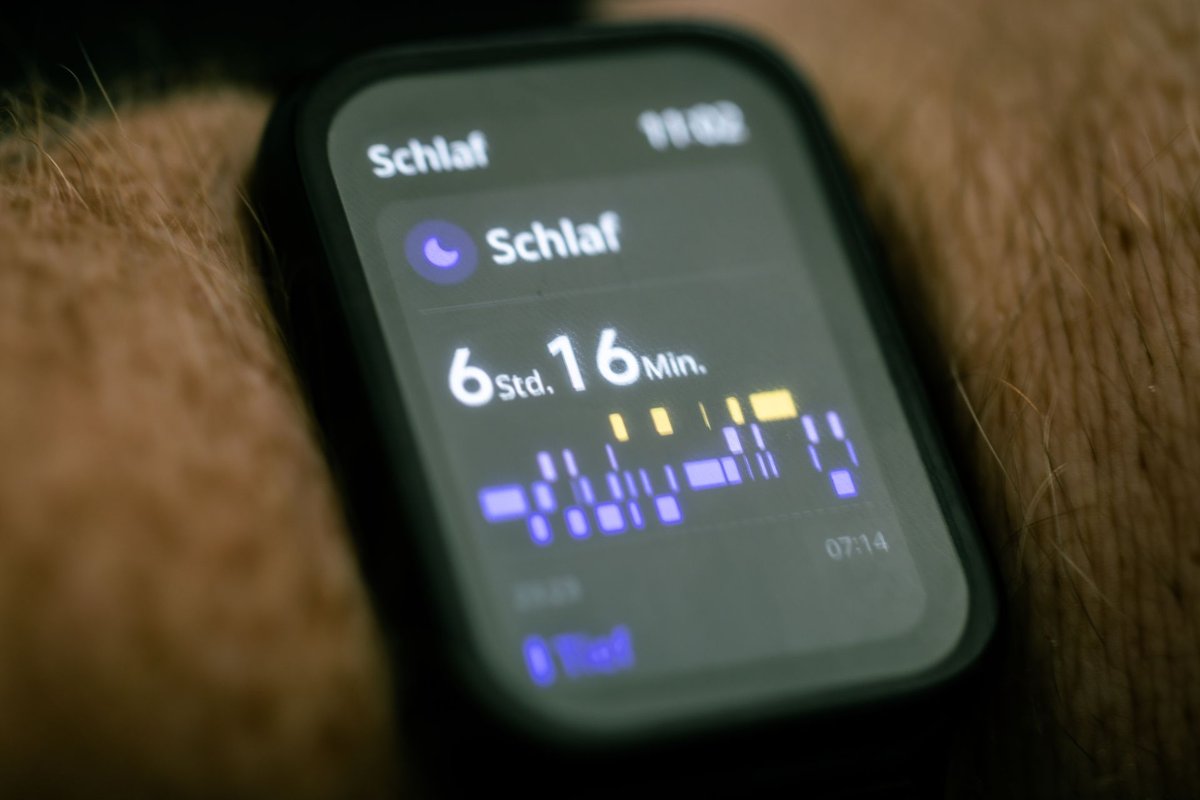
Sleep tracker accuracy matters because your watch, ring or band shows a "sleep score," stages and wake-ups every morning. Here's what in that data you can trust and what to take with a grain of salt.
Sleep tracker accuracy depends on the device: a watch, band, ring or app estimates how long and how well you slept. Many devices show total sleep time fairly well, but stages only roughly. So treat the data as a hint about your habits, not a grade for the night.
In the morning the tracker shows a score, stages and wake-ups — and sometimes one "bad" number spoils your mood more than the night itself. Let's look at how to read this data in a useful way.
How does a sleep tracker work?
Most devices don't "see" sleep directly; they draw conclusions from indirect signs. The main one is body movement.
- A motion sensor notices when you toss and turn and when you lie still.
- Many watches and rings also measure heart rate, and some measure breathing and skin temperature.
- The manufacturer's algorithm turns these signals into a sleep score, stages and number of wake-ups.
That's the weak spot: lying still while awake can be counted as sleep.
A phone lying on the mattress picks up movement even more crudely, so its estimates are the roughest.
How does a sleep tracker detect sleep stages?
By combining movement, heart rate and other signals — not brain activity, as in a sleep lab. That's why stages are the least precise part of the report.
In a study of seven consumer trackers published in the journal SLEEP, most devices did a decent job telling sleep from wakefulness but differed noticeably from lab data when estimating stages.
- According to the Sleep Foundation, in one 2021 study, trackers correctly identified deep sleep only 59% of the time.
- Devices often overestimate light sleep.
- Trackers are not medical devices and don't diagnose anything.
Sleep tracker accuracy comparison: ring, watch or app?
If you're choosing, a device on your wrist, finger or at the bedside usually gives a more reliable picture than a phone. Smartphone apps, according to the Sleep Foundation, are still inaccurate.
- A ring is handy if a watch on your wrist bothers you at night.
- A band or watch — such as an Apple Watch or Garmin — is an option if you also track activity during the day.
- Whatever device you choose, wear it consistently: it only makes sense to compare data from the same device.
- Charge it during the day so you don't miss nights and don't keep cables and bright lights next to your bed.
How can you use a tracker without obsessing over the numbers?
Look at trends and how you feel, not at one night's score. A tracker should help, not stress you out.
- Evaluate data over 1–2 weeks, not just last night.
- Check the numbers against how you feel: if you're alert during the day, a "low score" is no reason to worry.
- Don't spend extra time in bed for the sake of "good stats" — it's a common trap called orthosomnia according to the Sleep Foundation.
- Use the data for specific experiments: for example, see how your sleep changes if you cut out afternoon coffee.
- Turn off morning sleep score notifications if they ruin your mood right away.
- Every now and then, take a week off the tracker and compare how you feel.
What actually improves sleep?
Not numbers but habits: a consistent wake-up time, darkness and an evening without bright screens. We covered how to get your routine back in "How to fix your sleep schedule".
A tracker can show that you go to bed later than you think or that your sleep is shorter on weekdays. That's useful information, but it's your habits that need changing, not the numbers.
Read more about screens in "Blue light and sleep" and "Digital detox", and about how much sleep you need in "How much sleep do you need?".
Many people add the Silent Nights patch to their evening routine — according to the company, it supports relaxation and sleep without melatonin. And during the day, for energy and recovery, people choose the X39 patch, which, according to the company, supports natural production of the GHK-Cu peptide.