Stretching before and after a workout: when, how and how long
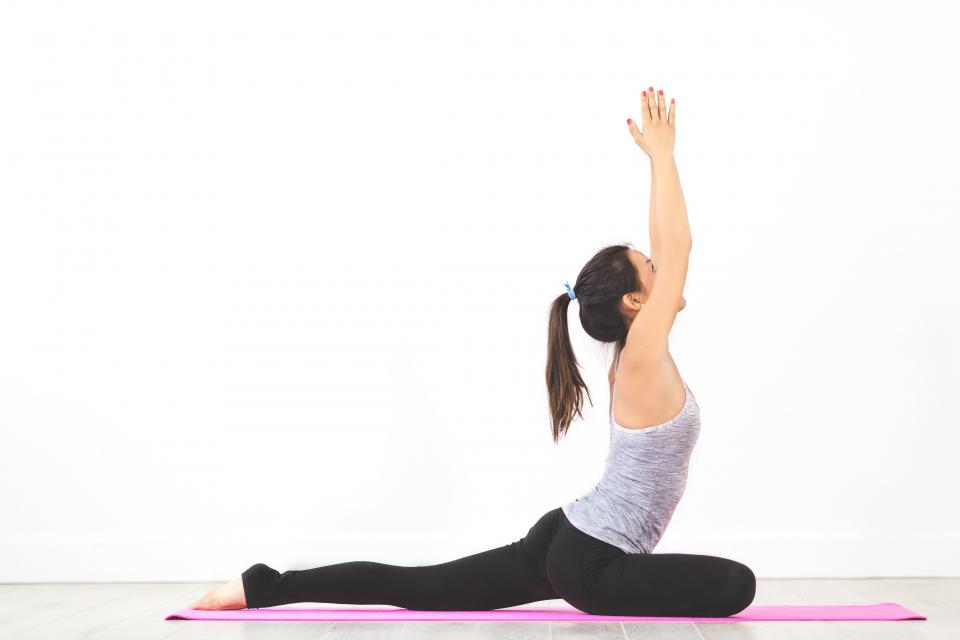
Stretching before and after a workout does two different jobs: before exercise you need a dynamic warm-up, afterward a calm static stretch. We answer common questions about flexibility — no myths.
Stretching before and after a workout means two different kinds of exercise. Before training, your muscles need to be warmed up with dynamic movements, while static stretching with held poses is best done after your workout, on warm muscles (NHS).
Flexibility is a physical ability just like strength and endurance. It determines how freely your joints move and directly affects your exercise technique and posture. The good news: you can improve flexibility at any age, and you can do it at home in 10–15 minutes.
Should you stretch before or after a workout?
Both, but in different forms: before a workout — a dynamic warm-up, after — static stretching. That way you both prepare your body for work and help it recover.
- Dynamic stretching — full-range movements without holding: leg swings, rotations, lunges.
- Static stretching — easing into a pose and holding it for 20–30 seconds.
Dynamic stretching before a workout: what should you do?
Before exercise your muscles need to be warmed up, not stretched. Holding poses for a long time on cold muscles before intense work isn't the best idea.
Dynamic exercises work best: leg swings, joint rotations, lunges with a torso twist, light squats. 5–10 minutes of this kind of warm-up gets your body ready to work.
What are the benefits of stretching after a workout?
Stretching after a workout helps you finish the session calmly, restore your muscles' length and keep your joints mobile. It's also a good way to switch from effort to rest.
Static stretching works best on warm muscles, meaning after a workout or as a separate session.
- Hold each pose for 20–30 seconds and breathe evenly.
- Stretch until you feel a light pull, not pain.
- Don't bounce — it triggers protective muscle tension.
- Repeat 2–3 times on each side.
Which leg stretches work after strength training?
Squats, lunges and deadlifts work the front and back of your thighs, your glutes and calves the most. Those are the areas to spend a few minutes on at the end of your session.
- Front of the thigh: standing next to a support, pull your foot toward your glutes.
- Back of the thigh: seated, reach toward the foot of your straight leg with a flat back.
- Glutes: lying on your back, pull your bent knee toward the opposite shoulder.
- Calves: place your hands on a wall, one leg behind you, heel pressed to the floor.
How often should you stretch?
For noticeable results, 2–3 sessions a week are enough, but a short daily stretch is even better (NHS).
It pairs well with your evening routine: slow stretching combined with calm breathing helps you relax before bed (see "Breathing exercises for stress"). For why flexibility declines with age, read "Flexibility after 40".
If you've had an injury or have joint pain, choose exercises together with a professional. For older adults we recommend starting with the gentler program in "Joint exercises for seniors".
What are the most common stretching mistakes?
Stretching shouldn't turn into a competition: the goal is free movement without discomfort, not the splits by a certain date. Pay attention to how the sensations change, not to inches.
Most problems come from rushing and wanting results faster. Flexibility improves gradually, and your body responds better to regularity than to force.
- Stretching cold muscles before intense work.
- Pushing through pain rather than a light pull.
- Holding your breath — breathe evenly and calmly.
- Comparing yourself with others: everyone starts with a different level of flexibility.
- Stretching once a month and expecting noticeable results.
If you'd like to start your day with movement, try the short routine in "Morning stretches".
After a workout and stretching, many people use IceWave patches — they're chosen for comfort in movement. And if stretching is part of your evening routine, it pairs well with the Y-Age Aeon patch, which, according to the company, helps you relax. If you train regularly, you may also find "X39 for athletes" useful.