Surf workouts for beginners: body prep, land exercises and recovery
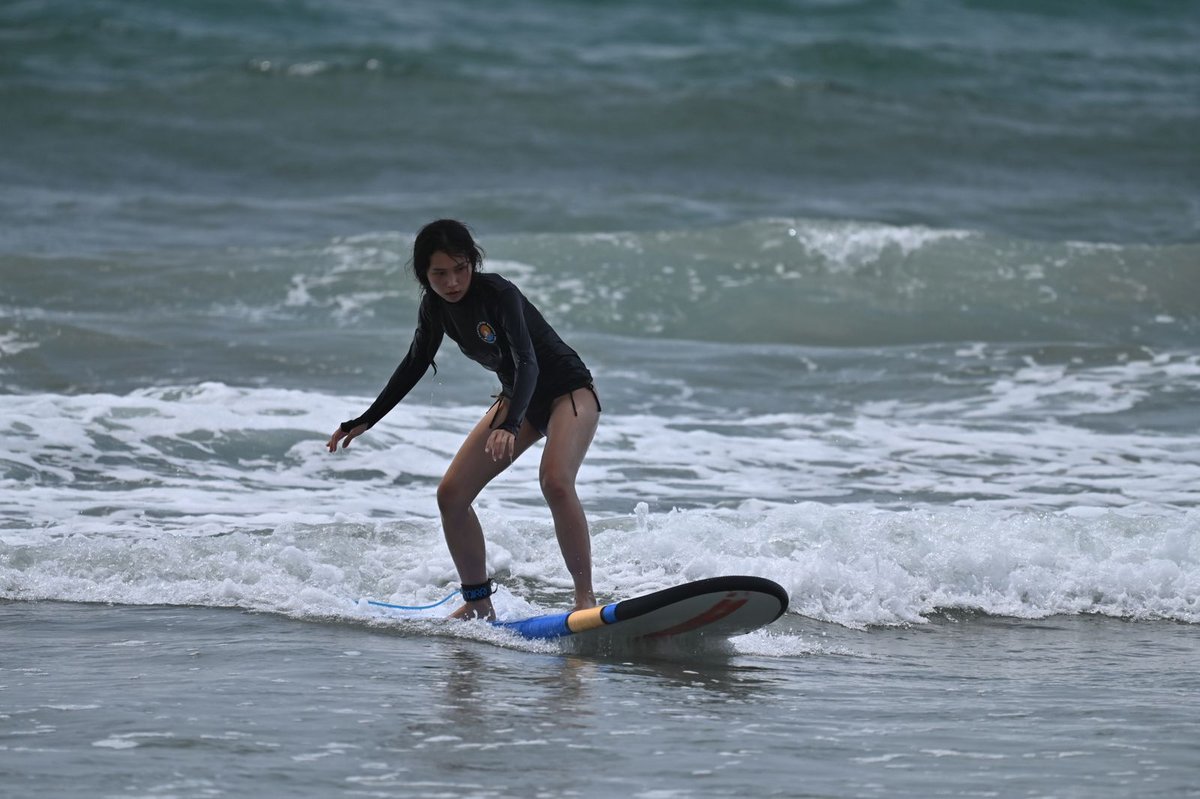
Surf workouts for beginners matter because surfing looks like riding waves, but in reality it's mostly paddling and patience. If you prepare your shoulders, core and breathing in advance, your first days at surf school will bring more fun and less fatigue.
Surfing for beginners is mostly about arm work and staying on the board, not flashy rides — which is why surf workouts pay off. A study of competitive surfers found they spend 54% of the time paddling, 28% waiting for a wave and only about 8% actually riding (ScienceDaily). Beginners have a similar ratio, so your shoulders and back should come first.
Good preparation on land makes your first lessons much more enjoyable: less fatigue and more attempts to stand up on the board.
Surfing for beginners: where to go?
Choose a place with surf schools, a gently sloping sandy bottom and small, soft waves. What matters isn't how popular the resort is, but the conditions for beginners during the season of your trip.
- Look for beaches with a sandy bottom and no rocks or reefs.
- Check whether there are schools with beginner groups and gear rental.
- Ask about the season: at the same time of year, waves on one coast can be gentle and on another far too strong.
Surfing in Portugal for beginners: why do people choose it?
Portugal is one of the popular destinations for beginners: a long Atlantic coastline, lots of surf schools and beaches with different conditions. It's easy to find a spot that suits your very first lessons.
The Atlantic can be cool and powerful, so it's especially important for beginners to surf with an instructor, choose beginner beaches and stay out of the water in big waves.
Before your trip, read up on the specific beach and school: what the waves are like on your dates, whether there are lifeguards and wetsuit rental.
Surf workouts for paddling: how to get fit for surfing
Focus on swimming, shoulder endurance and upper-back mobility. Train 2–3 times a week for 4–6 weeks before your trip.
- Freestyle swimming for 20–30 minutes is the best paddling "simulator"; more on the benefits of the pool in "Swimming for health".
- Resistance band exercises for the rotator cuff — to protect the joint during long paddling sessions (Fit to Play).
- Walks and easy runs for general endurance.
Don't forget your breathing: a calm exhale while paddling and the ability to relax in the water save energy. Pool swimming with short sprints is good preparation for pushing through the whitewater to the lineup.
Surf workouts at home: which land exercises to do?
The key ones are the pop-up (quickly getting to your feet on the board), core and balance exercises. You can do them at home on a mat for 15–20 minutes.
Start slowly and focus on technique: speed will come once the movement feels natural.
- Pop-up: from lying on your stomach, get into your stance in one movement — 3 sets of 8–10 reps.
- Superman and plank — for the back and core muscles that hold you in the paddling position.
- Squats and lunges — for a stable stance on the board.
- Exercises on a balance pad, or simply standing on one leg.
How to recover after a day on the water?
Exercise physiologists note that surfing alternates short, intense efforts with pauses, so the load is closer to interval training (Sports Medicine). Afterward, stretching your shoulders and chest (more on stretching), water, a proper meal and sleep all help.
- Drink water throughout the day: in the sun and salt water you feel thirst less.
- Don't forget about the sun: tips are in "Sun protection for your skin".
- Limit your time on the water for the first few days, even if you want more.
More ideas for an active vacation are in "How to prepare for mountain hiking and trekking".
What to pack for a surf trip?
For an active vacation on the coast, many people bring X49 — according to the company, this patch is designed for endurance in active people. And after a busy day in the water, there's IceWave, which, according to the company, supports comfort in motion. According to the company, the patches don't penetrate the skin.