Tai chi for beginners: principles, benefits for balance and first steps
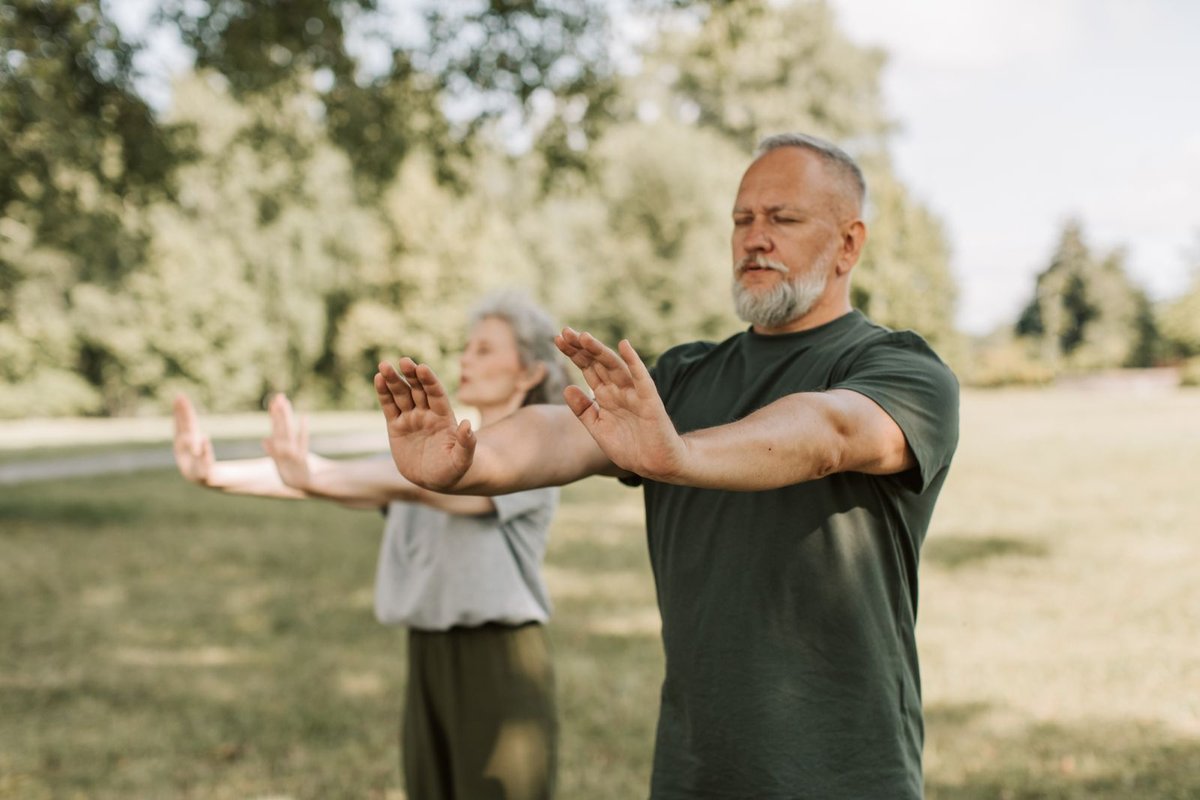
Tai chi for beginners means slow, flowing movements, calm breathing and attention to your body. Here is how the practice benefits balance and calm, which exercises to learn first and how to start with no experience.
Tai chi for beginners is a handful of simple, slow movements, steady breathing and attention to balance that you can learn at any age. The practice is often called "meditation in motion": you flow smoothly from one posture to the next while keeping your balance (Harvard Health). In Taiwan and China, tai chi in the park in the morning is a common sight.
What is tai chi and is it good for beginners?
Tai chi is a practice that grew out of a Chinese martial art and evolved into gentle exercise for the body and mind. It suits beginners well: there are no strikes, jumps or sudden movements.
It's built on forms — linked sequences of movements. A full form can be long, but you can start with a few elements and gradually connect them.
There are several styles of tai chi, but for a beginner the differences don't matter much. It's far more important to find a clear instructor or course and practice regularly.
What are the benefits of tai chi?
Research links regular tai chi practice with better balance and a lower risk of falls in older adults (NCCIH, U.S. National Institutes of Health). Many people also find that slow breathing helps release tension after a busy day.
- Balance: constantly shifting your weight trains stability.
- Mobility: smooth movements gently work the joints.
- Calm: focusing on your breath helps you switch off from worries.
- Posture: the stance teaches you to keep your back long and your shoulders down.
If balance is especially important to you, also read "Balance and fall prevention".
Tai chi for beginners exercises: where to start?
It's better to start not with a long form but with a few basic elements. You can practice each one for 2–3 minutes.
- Stance: feet shoulder-width apart, knees softly bent, back long, shoulders down.
- Weight shift: slowly shift your weight from one leg to the other without lifting your feet.
- "Opening" and "closing": at chest level, your hands smoothly move apart as you inhale and come together as you exhale.
- Tai chi step: place your foot heel first, then smoothly shift your weight onto it.
- Breathing: even, through the nose, without holding — the movement follows the breath.
Tai chi or qigong for beginners: which to choose?
Qigong is a broader term: simple breathing and movement exercises, often done in place. Tai chi qigong combines both approaches and suits people who find long forms hard to memorize for now.
If you're just starting, you can use a short qigong sequence as a warm-up and then learn tai chi elements. For other ways to combine movement and breath, see "Yoga for beginners" and "Breathing exercises for stress".
Tai chi for beginners at home: how to set up your first sessions
The easiest way to start is with a group or online class for beginners, where an instructor demonstrates a short form and explains the stance. At home, 10–15 minutes and a couple of steps of free space are enough.
- Pick a regular time — morning or evening.
- Start with 5 minutes of breathing and stance, then add 1–2 movements.
- Move more slowly than you think you need to: in tai chi, speed isn't the point.
What mistakes do beginners make?
The most common mistake is too deep a stance and tense shoulders. Your knees should be softly bent but not jut far forward, and the movement should come from the torso, not just the arms. For joint-friendly training, see "Joint mobility exercises after 55".
Another mistake is holding your breath while trying to copy a movement exactly. If your breathing gets off track, stop, take a couple of calm breaths and continue more slowly.
Tai chi teaches you to slow down, and many people want to carry that feeling through the day. Some choose Y-Age Aeon — according to LifeWave, a patch for relaxation and calm — while those who care about comfort in motion may like IceWave.