Breathing Techniques for Sleep: 4-7-8 and Other Simple Ways to Fall Asleep
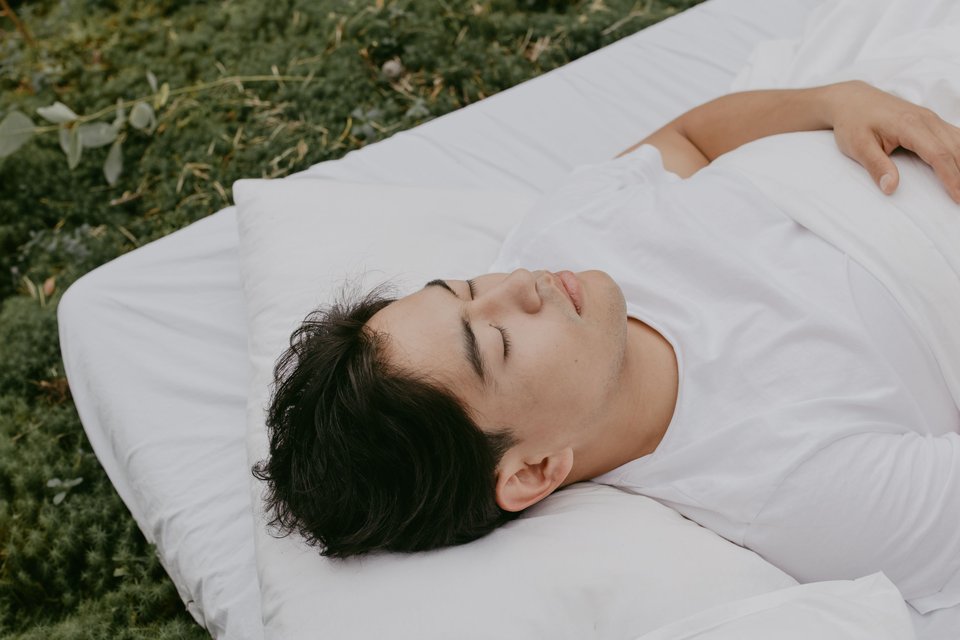
Breathing techniques for sleep are the most accessible way to switch your nervous system into rest mode when your thoughts are going in circles. Here is a look at the 4-7-8 method, belly breathing and the extended exhale.
Breathing techniques for sleep work because breathing is directly linked to the state of your nervous system. When we're anxious or running through tomorrow's to-do list, breathing becomes fast and shallow. Consciously slowing your breath works the other way: it signals that there is no danger and you can relax.
How does breathing help you fall asleep?
Slow breathing with a long exhale helps your body shift from “action” mode into rest mode. Your heart rate slows, your muscles relax and your attention moves from anxious thoughts to counting.
How breath control helps manage the stress response is explained by Harvard Health Publishing. For sleep, what matters isn't how complex the technique is but how regularly you use it.
The 4-7-8 breathing technique for sleeping
This is one of the best-known techniques for falling asleep: breathe in for 4, hold for 7, breathe out for 8. It takes a couple of minutes and requires no preparation.
- Take a slow breath in through your nose for a count of 4.
- Hold your breath for a count of 7.
- Slowly breathe out through your mouth for a count of 8.
- Repeat the cycle 4–8 times.
The long hold and extended exhale slow your heart rate and help you switch into rest mode. If holding for 7 is hard, shorten the counts while keeping the ratio.
Diaphragmatic belly breathing
Belly breathing is a gentler technique without breath holds, suitable for beginners. It's easy to do lying in bed.
- Lie on your back with one hand on your chest and the other on your belly.
- Breathe so that the hand on your belly moves first.
- Breathe in for 4 counts and out for 6 counts, with no hold.
- Repeat 5–10 cycles, noticing yourself relax with each exhale.
What other breathing techniques for sleep and anxiety can you try?
Besides 4-7-8 and belly breathing, a simple extended exhale and combining breathing with muscle relaxation work well. Sleep Foundation offers a selection of exercises for falling asleep, and NHS covers basic breathing exercises.
- Extended exhale: breathe in for 4, out for 6–8, with no hold.
- Breathing with relaxation: on each exhale, mentally release tension in one part of your body — from your feet to your face.
- Counting exhales: count your exhales from one to ten and start over if you lose count.
When and how do you build breathing into your evening routine?
Breathing techniques work best alongside other conditions for good sleep: a dark, cool room and no screens for 30–60 minutes before bed.
A detailed look at the conditions for quality sleep is in “How much sleep do you need?”, ideas for the evening in “Evening rituals for solid sleep”, and more stress-management techniques in “Breathing exercises for stress”.
What mistakes stop breathing techniques from working?
The most common obstacle is trying to “do it right” at any cost. Breathing should calm you, not become yet another task.
- Too deep, strained inhales — breathe softly, without effort.
- Long holds that make you dizzy — shorten the counts.
- Practicing with your phone in hand — screen light and notifications cancel out the effect.
- Expecting instant results — the technique works better with regular practice.
If you feel discomfort during the exercise, simply return to your normal calm breathing. The goal isn't a perfect count but a sense of calm that makes it easier to fall asleep.
What else helps you relax before bed?
A breathing ritual pairs well with LifeWave's Silent Nights patch — according to the company, it helps you relax in the evening without melatonin or sleeping pills. And the company positions the Cellergize Evening drink with L-theanine, taurine and magnesium as support for natural relaxation before sleep. It is a dietary supplement: if you are pregnant, breastfeeding, taking medication or have a medical condition, talk to your doctor first.
Read also: Sophrology: a French relaxation technique you can try at home.