Yoga for Beginners: Where to Start and Why It's Not Just for Flexible People
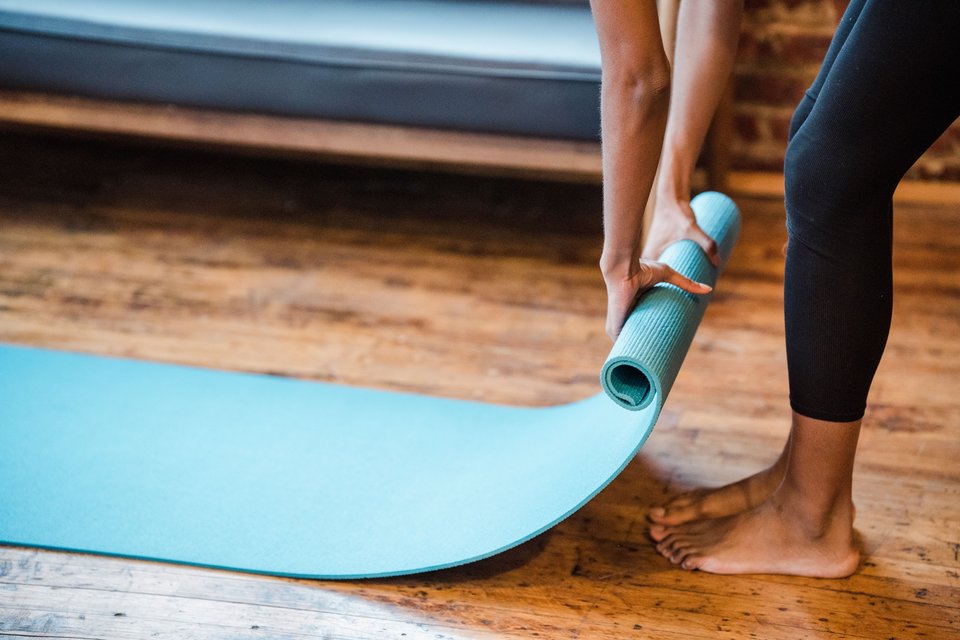
Yoga for beginners isn't about the splits — it's about simple movements and calm breathing. Here is how to start practicing at home with no experience, what you need and how to structure your first 15 minutes of practice.
Yoga for beginners often seems intimidating because of complicated poses, but at its core are simple movements combined with mindful breathing. That combination works both for the body — improving mobility and posture — and for the nervous system, helping you lower stress and switch off after a tense day. You can start at home, with no experience and no special flexibility.
Why is yoga suitable even if you're not athletic?
There is no competition and no strict standards in yoga — each pose is done within your own range of motion. That is why a person of any age and fitness level can start, men and women alike.
A beginner needs only a basic set of 8–10 poses and attention to breathing to notice less stiffness in the body after just a few sessions. What is known about the benefits and safety of yoga is briefly summarized by NIH NCCIH.
Yoga for beginners at home: where do you start?
Start with a short regular practice rather than long sessions once a week. Here is what you need to begin:
- A non-slip mat and comfortable clothes that don't restrict movement.
- A quiet spot where you can lie down at full length.
- A short beginner routine of 15–20 minutes — you don't need more to start.
- A regular time: in the morning for energy or in the evening to relax.
Move slowly and sync movement with breath: inhale as the body opens, exhale as it folds. Don't chase the depth of a pose — the right range is marked by a light pull, not pain.
15-minute yoga for beginners: a simple routine
Fifteen minutes is enough to loosen up your whole body and calm your breathing. A sample structure for this practice:
- 2 minutes — calm seated breathing, focusing on the exhale.
- 4 minutes — gentle bends, cat-cow on all fours, torso twists.
- 5 minutes — simple standing poses: mountain, forward fold with bent knees, warrior within a comfortable range.
- 4 minutes — lying down: a supine twist and relaxation (savasana).
Yoga for beginners over 50
After 50, yoga is especially valuable for its gentle work on mobility and balance. The key is a gentle pace and paying attention to how you feel.
- Use props: a chair, a wall, a folded blanket under your knees.
- Avoid sharp backbends and deep twists in your first sessions.
- Add balance poses next to a wall — good training for stability; more in “Balance and fall prevention”.
What does yoga do for your body and nervous system?
Regular practice improves joint mobility, strengthens the core and back, and slow breathing helps ease tension. It complements “Stretching before and after a workout” well.
Slow breathing at the end of practice helps you relax and fall asleep more easily in the evening — Harvard Health Publishing writes about the link between yoga and mental wellbeing, and breathing techniques are covered in detail in “Breathing exercises for stress”.
What mistakes do yoga beginners make?
Most often beginners rush and try to copy a pretty picture right away. Yoga works better when your attention is on sensations, not on how the pose looks.
- Holding their breath in difficult poses — try to breathe evenly the whole time.
- Stretching through pain in pursuit of depth.
- Skipping relaxation at the end of practice, even though it matters as much as the movement.
- Practicing right after a big meal — it's better to wait a couple of hours.
How do you end an evening practice?
Evening yoga is best finished with a calm bedtime ritual: some people add Silent Nights patches, which according to the company help you relax in the evening. And for those who live at a fast pace, the company offers the Y-Age Aeon patch for relaxation and a calmer response to stress — more in “Y-Age Aeon patch”.
Read also: Pilates for beginners: how to start at home and how it differs from yoga, Tai chi for beginners: principles, benefits for balance and first steps.